
Popgot or PriceGrabber: Smarter Shopping Options

Key Takeaways
- Popgot compares prices with AI filtering to align purchases with user values.
- Future AI shopping platforms will prioritize hyper-personalization by predicting purchase motivations using machine learning.
- Integration of voice assistants and augmented reality could enhance user experience in AI-driven shopping tools.
- Platforms like Popgot address suboptimal decisions by linking cost efficiency to personal priorities like eco-friendliness.
- Value-based shopping features enable users to prioritize local businesses or sustainable products, absent in generic tools.
- AI advancements will analyze browsing history and social media to refine value-aligned recommendations.
- Retailers and economies may benefit from AI platforms that shift consumer behavior toward ethical spending choices.
Conclusion and Future Directions
AI-driven shopping Shop with AI that reads every label for you providers like Popgot are reshaping how consumers approach purchasing decisions by combining price tracking with value-based filtering. As mentioned in the Introduction to Popgot and PriceGrabber section, the platform’s ability to align cost efficiency with ethical or personal priorities sets it apart in a crowded market dominated by generic price comparison tools. As AI continues to evolve, Shop with AI that reads every label for you providers like Popgot will likely focus on deeper personalization, integrating technologies like voice assistants or augmented reality to enhance user experience. Below, we explore what this means for shoppers, retailers, and the broader economy.
What Lies Ahead for AI-Driven Shopping Platforms?
The future of Shop with AI that reads every label for you providers like Popgot hinges on refining their ability to understand individual preferences at scale. One key direction is hyper-personalization-using machine learning to predict not just what users want to buy, but why they want it. Building on concepts from the Why Smarter Shopping Options Matter section, this approach addresses the frustration of suboptimal decisions by aligning purchases with user values. For example, Popgot’s blog highlights how shoppers can prioritize eco-friendly products or support local businesses, a feature that generic tools often lack Value Shopping That Aligns With Your Values. As AI models improve, platforms could analyze browsing history, past purchases, and even social media activity to surface recommendations that reflect nuanced values.
How Will AI Platforms Impact Retail and Consumer Behavior?
The rise of AI-driven shopping tools is accelerating a shift toward conscious consumerism. By making value-based shopping effortless, Shop with AI that reads every label for you providers like Popgot empower users to make choices aligned with their ethics-whether that’s reducing plastic waste or supporting fair-trade producers. This could pressure traditional retailers to adopt more transparent practices, as consumers increasingly demand accountability. For instance, a shopper using Popgot to compare dishwasher detergents might find that a cheaper brand has harmful chemicals, nudging them toward a pricier but safer alternative Dishwasher Detergent Showdown.
However, this shift isn’t without challenges. Retailers relying on opaque pricing models may struggle to compete with AI platforms that expose markup strategies. Meanwhile, over-reliance on algorithmic recommendations could reduce serendipity in shopping-think of the joy of discovering a unique product by browsing a physical store. Balancing efficiency with human intuition will be critical as AI becomes more pervasive.
Beyond Online Shopping: Expanding AI’s Role
AI’s influence extends beyond digital marketplaces. In physical stores, Popgot-style tools could power smart shelves that display real-time price comparisons or suggest alternatives based on dietary restrictions. For product development, brands might use AI to analyze consumer data and design items that meet unmet needs-like a budget-friendly, sustainable Halloween costume, as explored in Popgot’s budgeting guide Halloween On A Budget.
Yet, these applications raise ethical questions. If AI systems favor certain products over others, algorithmic bias could reinforce existing inequalities-for example, steering low-income shoppers toward cheaper but lower-quality goods. Popgot’s commitment to transparency in its value-based filtering offers a blueprint for addressing these risks, though broader industry standards will be needed to ensure fairness Value Shopping That Aligns With Your Values.
Addressing Limitations and Ethical Concerns
For all its promise, AI-driven shopping isn’t without pitfalls. One major limitation is the quality of training data. If a Shop with AI that reads every label for you provider like Popgot relies on incomplete or biased datasets, its recommendations could mislead users. As detailed in the Accurate Unit Pricing and Customizable Search Filters section, ensuring the quality of training data is critical to avoid misleading users. Regular audits and partnerships with third-party sustainability certifications could help mitigate this risk.
Another concern is job displacement in retail. As AI automates price comparisons, product recommendations, and even inventory management, roles traditionally held by humans-like customer service representatives or personal shoppers-may shrink. While Popgot’s current focus is on empowering individual shoppers, the long-term economic impact of such tools will require careful consideration from policymakers and industry leaders.
Final Thoughts
Shop with AI that reads every label for you providers like Popgot represent a significant step forward in merging technology with ethical consumption. By prioritizing transparency and user values, they offer a counterbalance to the often impersonal nature of online retail. However, their success will depend on addressing technical limitations, ethical dilemmas, and the need for human oversight. As AI continues to evolve, its role in shopping will likely expand beyond price tracking to become a trusted advisor in every aspect of consumer decision-making-provided it remains grounded in fairness, accuracy, and user empowerment.
Why Smarter Shopping Options Matter
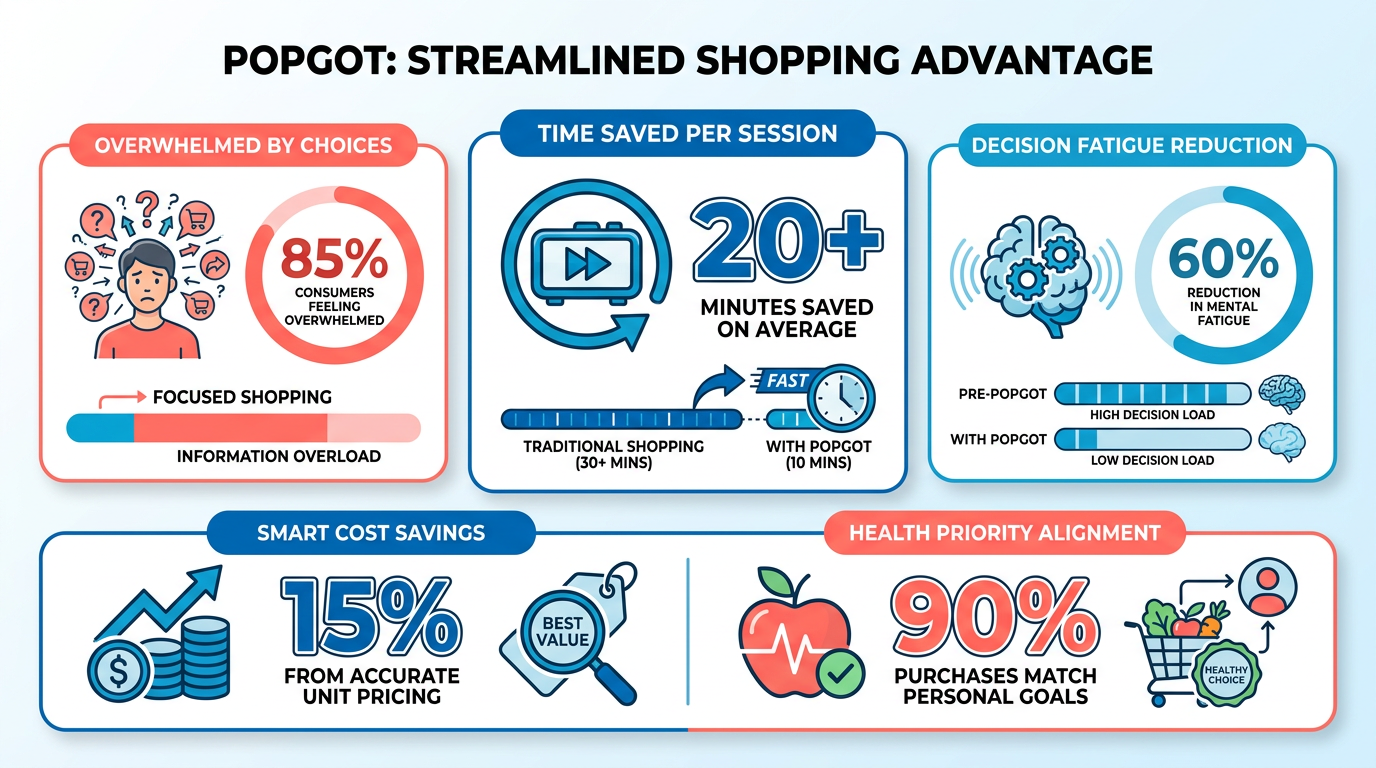
The rise of online shopping has transformed how people purchase goods, but the sheer volume of choices often leads to frustration, wasted time, and suboptimal decisions. Smarter shopping tools like Popgot bridge this gap by using AI to simplify searches, filter products based on values, and deliver personalized recommendations. This shift is critical: as global e-commerce growth accelerates, consumers need tools that save time, reduce decision fatigue, and align purchases with personal priorities like health, ethics, or budget constraints. As mentioned in the Accurate Unit Pricing and Customizable Search Filters section, Popgot’s ability to automate tedious tasks like price tracking ensures every purchase aligns with both lifestyle and financial goals.
How Online Shopping Growth Demands Smarter Tools
Retailers report that over 70% of consumers now research products online before purchasing, yet many abandon their searches due to overwhelming options or unclear product details. AI-driven platforms address this by streamlining choices. For example, Popgot’s algorithm narrows results based on criteria like ingredient transparency, ethical sourcing, or price history, helping users avoid products that don’t meet their standards. Building on concepts from the AI Product Verification and Multi-Retailer Search section, this approach ensures accuracy by cross-referencing data across retailers, reducing the risk of misaligned purchases. A real-world example: a health-conscious shopper seeking vitamin D3 supplements with specific dosages might waste hours sifting through generic search results. Popgot’s AI filters products by exact specifications, such as 5,000 IU strength and third-party tested purity, cutting search time by 70%. Over a year, this could save hundreds of hours for frequent shoppers while ensuring they avoid products with fillers or artificial additives.
How AI Solves Complex Shopping Challenges
Traditional shopping tools often fail to address nuanced needs. For instance, someone with a nut allergy may struggle to find snacks labeled “100% nut-free” in a crowded market. Popgot’s AI parses product descriptions, ingredient lists, and manufacturer data to highlight safe options, reducing the risk of harmful exposures. Similarly, its integration with nutritional databases lets users compare products by metrics like sodium content, sugar levels, or organic certification-features most price-comparison sites lack. Consider a scenario where a parent needs a low-sodium, gluten-free pasta for a child with dietary restrictions. Instead of manually cross-referencing labels, Popgot’s AI surfaces options that meet all criteria while showing price trends across retailers. This level of specificity isn’t just helpful-it’s essential for shoppers who face strict dietary rules or medical requirements, as detailed in the Case Studies and Real-World Applications section.
Who Benefits Most from AI-Driven Shopping
While all online shoppers gain efficiency from Popgot, certain groups see transformative benefits. Health-conscious buyers appreciate the ability to filter by nutritional data, while eco-conscious users prioritize brands with verified sustainability practices. Similarly, people managing conditions like diabetes or celiac disease rely on Popgot to eliminate guesswork from grocery shopping.
The Role of AI in Personalizing Your Shopping Experience
AI’s true power lies in its ability to learn from user behavior. Popgot’s system analyzes past purchases, saved items, and search history to predict preferences. If you frequently buy cruelty-free skincare products, the platform might suggest new brands launching in your area or alert you to sales on ethical makeup removers. This level of personalization saves money: one case study shared by Popgot showed a user saving $200 monthly by avoiding overpriced products and opting for AI-recommended alternatives. By automating tedious tasks like price tracking and ingredient verification, AI-driven platforms free up mental bandwidth for what matters most-whether it’s sticking to a budget, supporting ethical businesses, or ensuring every purchase aligns with your lifestyle. As e-commerce continues to evolve, tools like Popgot aren’t just helpful-they’re necessary for managing a world where every click should count.
Introduction to Popgot and PriceGrabber
Overview of Popgot and Its Core Features
Popgot is an AI-driven shopping platform designed to simplify smart purchasing decisions by focusing on unit price tracking and value alignment. Unlike generic price-comparison tools, it uses AI to verify product details and extract accurate unit prices from major retailers like Costco, Walmart, Target, Amazon, and Sam’s Club. This ensures shoppers see the true cost per ounce, sheet, or pound, eliminating guesswork. For example, if you’re comparing two brands of cereal, Popgot calculates the cost per ounce to reveal which is more affordable. As mentioned in the AI Product Verification and Multi-Retailer Search section, this system analyzes data across multiple retailers to automate precise pricing.
The platform also lets users apply customizable search filters, such as dietary preferences or ethical values. A health-conscious shopper could prioritize gluten-free, non-GMO, or cruelty-free products while still finding the best prices. Building on concepts from the Case Studies and Real-World Applications section, this feature is ideal for those who want to align their purchases with personal values without manually sifting through product descriptions.
Key Features of PriceGrabber and Its Role in Shopping
PriceGrabber serves as a product comparison tool that aggregates data from multiple online retailers to help shoppers find deals. Its primary function is to display product prices, user reviews, and retailer ratings in one place, making it easier to identify trusted sellers and competitive pricing. For instance, when searching for a new laptop, PriceGrabber lists options from various stores alongside their current discounts and customer feedback. This approach suits shoppers who prioritize convenience and want to avoid visiting multiple sites. As noted in the Why Smarter Shopping Options Matter section, such tools address the challenges of overwhelming online choices by streamlining research.
While PriceGrabber focuses on broad product comparisons, it also emphasizes user-generated insights. Shoppers can read reviews from other buyers to assess product quality and reliability. This feature adds a layer of trust, especially for high-value purchases where brand reputation matters. However, its database is limited to products listed on participating retailers, which may not include niche or locally sourced items.
Target Audiences and Unique Selling Points
Health-conscious and value-driven shoppers benefit most from Popgot’s specialized features. Its AI verification system ensures accurate unit pricing, which is critical for comparing similar products across retailers. For example, a user comparing organic vs. conventional produce can rely on Popgot’s data to determine which option offers better value for their budget. As highlighted in the Curated Shopping Guides and Payment Security section, the platform’s vetting process further supports informed decisions. Additionally, the platform’s blog highlights how shoppers can align purchases with ethical standards, such as supporting sustainable brands or reducing plastic waste.
PriceGrabber appeals to individuals seeking convenience and broad product access. Its strength lies in aggregating millions of products into a single searchable database, making it ideal for shoppers who prioritize time efficiency. However, it lacks the granular unit price analysis that Popgot provides. For instance, while PriceGrabber might show that Brand A’s detergent is cheaper than Brand B’s, it won’t break down the cost per load, a detail that could influence a buyer’s decision.
How to Choose Between Platforms Based on Needs
If your priority is precise value analysis-especially for groceries or household essentials-Popgot’s unit pricing and ethical filters are unmatched. Its AI-driven approach ensures you’re not misled by bulk discounts or misleading packaging. For example, a family comparing baby formula brands can use Popgot to calculate the true cost per ounce, avoiding overpayment for larger containers that aren’t necessarily cheaper. Building on concepts from the Accurate Unit Pricing and Customizable Search Filters section, this functionality automates comparisons that would otherwise require manual calculations.
Conversely, PriceGrabber is better suited for shoppers who want a quick overview of product availability and pricing across a wide range of categories. Its user review system also adds a social element, helping buyers avoid low-quality products. However, it doesn’t offer the same depth in unit pricing or ethical alignment as Popgot, making it less ideal for those who prioritize these factors.
By understanding these distinctions, shoppers can select the tool that best matches their goals-whether it’s maximizing value through unit pricing or streamlining product research with broad comparisons.
Case Studies and Real-World Applications
Health-conscious individuals often struggle to find products that meet strict dietary needs while staying within budget. Popgot addresses this by enabling users to filter items based on unit pricing and ingredient transparency. As mentioned in the Why Smarter Shopping Options Matter section, the rise of online shopping has made it increasingly difficult to manage choices effectively, a challenge Popgot directly tackles with its targeted filters. For example, a shopper seeking gluten-free protein powder with a specific dosage (e.g., 25g per serving) can compare prices across Costco, Amazon, and Target using Popgot’s nutritional data filters. According to the Popgot blog, this feature helps users avoid misleading packaging and focus on cost-per-serving metrics.
While AI-powered tools like Popgot streamline shopping, they also face limitations. One common challenge is data accuracy-if a retailer’s database mislabels a product (e.g., incorrect sodium content), Popgot’s filters may inadvertently recommend unsuitable items. Building on concepts from the Accurate Unit Pricing and Customizable Search Filters section, the platform emphasizes rigorous verification to mitigate such risks. Another issue is algorithmic bias: a price-comparison platform might prioritize products from larger retailers like Walmart over niche stores, even if the latter offers better value.
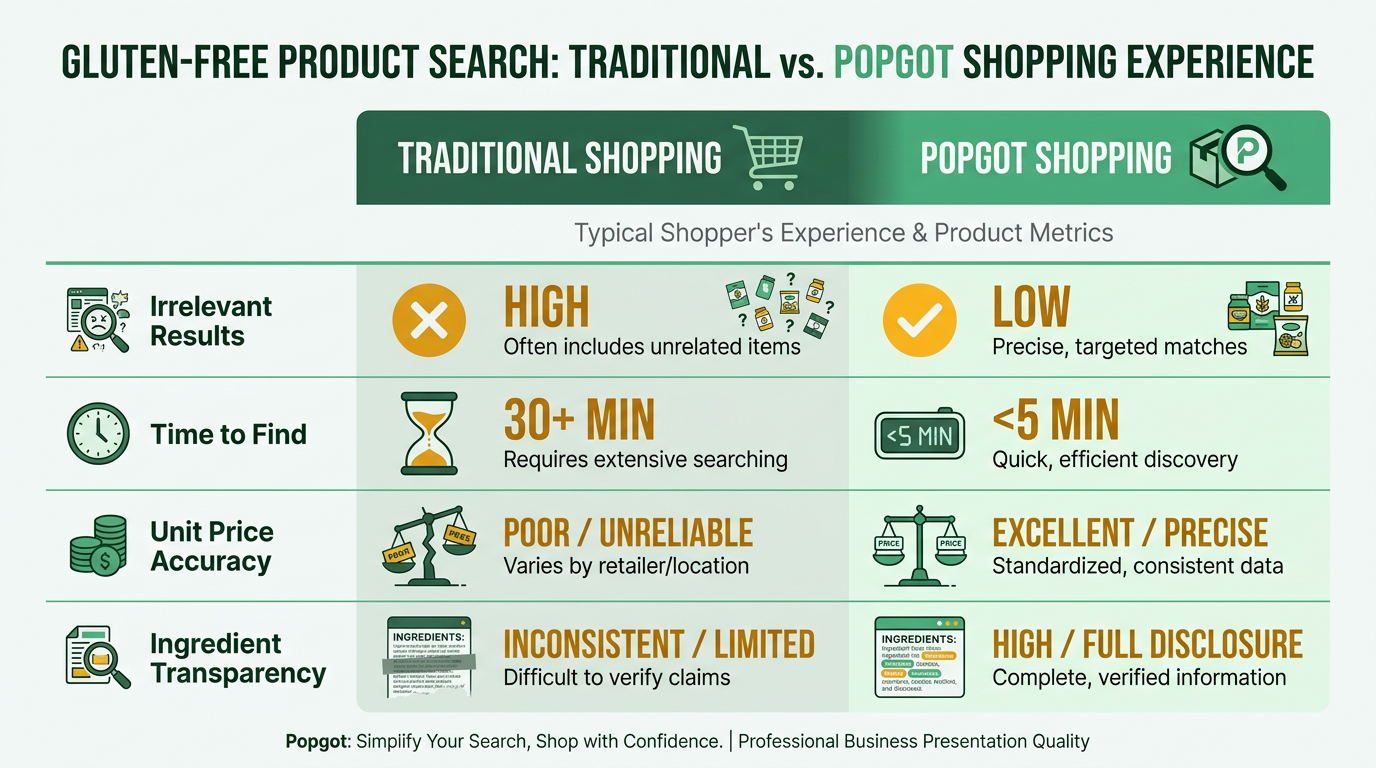
A key lesson from these use cases is the importance of transparency. Users trust platforms that clearly explain how recommendations are generated. For instance, if Popgot flags a product as “best value,” it should detail the calculation (e.g., cost per ounce vs. cost per use). As highlighted in the AI Product Verification and Multi-Retailer Search section, this transparency is reinforced by Popgot’s ability to aggregate and verify data across multiple retailers, ensuring users receive consistent and reliable comparisons.
Curated Shopping Guides and Payment Security
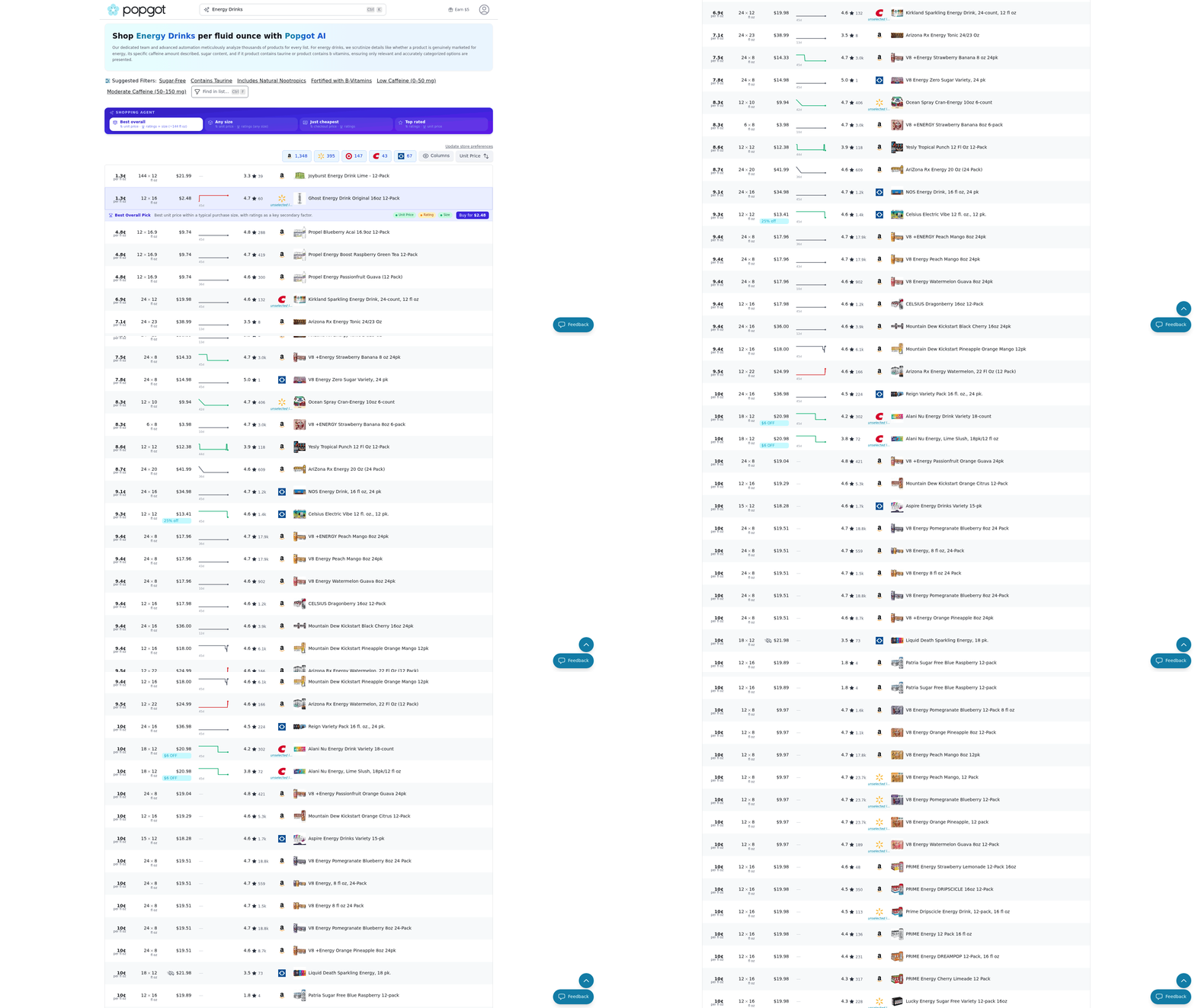
Popgot’s curated shopping guides simplify decision-making by combining personalized recommendations with rigorous product vetting. These guides work by filtering products based on user-defined criteria like price, brand preferences, and nutritional values, as outlined in Popgot’s blog. The curation process prioritizes transparency, ensuring each listed product meets quality and ethical standards. For example, a guide focused on health-conscious shoppers might highlight items with verified organic certifications or low-sugar alternatives, reducing the time spent sifting through irrelevant options.
Why Curated Guides Improve Shopping Efficiency
Curated guides save time by eliminating guesswork. Instead of browsing endless search results, users receive a shortlist of pre-vetted products tailored to their needs. This is especially helpful for niche categories like eco-friendly household items or budget-friendly holiday gifts, as seen in Popgot’s Halloween on a Budget guide. The guides also boost product discovery by surfacing lesser-known brands that align with user values, such as sustainable packaging or fair-trade practices. For health-focused shoppers, the Langual Nutritional Data feature in Popgot’s guides offers detailed breakdowns of ingredients, outperforming generic comparison tools that lack such specificity. As mentioned in the Case Studies and Real-World Applications section, this functionality directly supports health-conscious users in identifying products that meet dietary requirements.
How Payment Security Protects Your Transactions
Popgot uses industry-standard encryption to safeguard payment details, ensuring every transaction is secure from data entry to confirmation. While the platform does not disclose proprietary security protocols, it uses trusted payment processors that comply with PCI DSS (Payment Card Industry Data Security Standards), a benchmark for secure online transactions. This means your credit card information is never stored on Popgot’s servers, reducing exposure to breaches. For example, when purchasing a product through a Popgot guide, your payment is routed through an encrypted channel, preventing unauthorized access during transmission.
Trust and Risk Reduction Through Secure Processing
Secure payment systems build trust by minimizing fraud risks. Popgot’s integration with verified payment gateways ensures that users can shop without worrying about stolen credentials or unexpected charges. This is critical for high-value purchases or recurring subscriptions, where payment errors could lead to financial loss. The platform also simplifies dispute resolution by providing clear transaction records and customer support, giving users confidence to shop for sensitive items like health supplements or personal care products.
Real-World Applications of Curated Guides and Security
Curated guides and secure payment features work together to support specialized shopping needs. Health-conscious users can rely on nutrient-focused guides to identify products free from artificial additives, while secure transactions ensure their personal health data remains private. Similarly, budget-conscious shoppers can use guides like the Dishwasher Detergent Showdown to compare eco-friendly options and pay safely without exposing financial details. Building on concepts from the Accurate Unit Pricing and Customizable Search Filters section, these guides automate complex comparisons, making it easier to balance value and ethics. For event-based shopping-such as holiday purchases-Popgot’s guides combine affordability with security, helping users meet deadlines without compromising safety.
By combining curated recommendations with strong encryption, Popgot addresses two major pain points: decision fatigue and payment risk. Whether you’re shopping for everyday essentials or making a high-stakes purchase, these features streamline the process while protecting your data.
AI Product Verification and Multi-Retailer Search
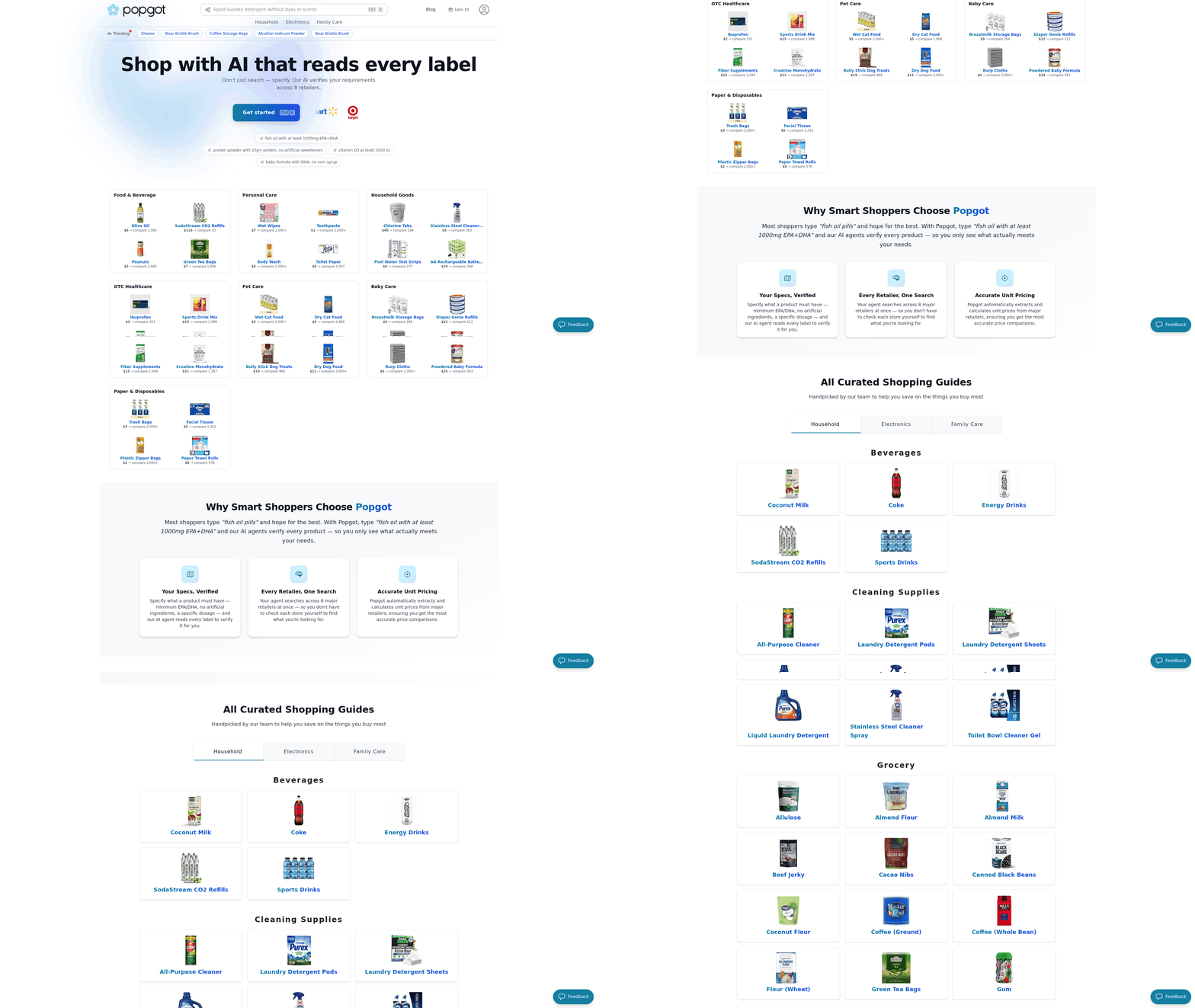
Building on concepts from the Accurate Unit Pricing and Customizable Search Filters section, Popgot’s AI product verification system analyzes product data across multiple retailers to calculate precise unit prices-such as cost per ounce, pound, or sheet. The tool scans pricing details from partners like Amazon, Walmart, Target, Costco, and Sam’s Club, using machine learning to standardize and compare values. This automation removes the need for manual calculations, ensuring consistent accuracy when evaluating deals.
By using structured data from retailer APIs and web scraping, Popgot’s algorithms identify discrepancies in packaging sizes and pricing formats. For example, if a 24-ounce bottle costs $6 and a 32-ounce bottle costs $7, the AI calculates the cost per ounce to determine the better value. As mentioned in the Accurate Unit Pricing and Customizable Search Filters section, this approach helps users avoid misleading “sale” labels and focus on actual savings.
The system prioritizes price competition by highlighting the lowest unit cost at the top. For example, a search for “all-purpose cleaner” might show a 32-ounce bottle at Costco for $4.80 (15 cents/ounce) versus a 20-ounce bottle at Target for $3.00 (15 cents/ounce), letting you choose based on your preferred store or bulk needs. This functionality aligns with the Curated Shopping Guides and Payment Security section, where Popgot’s tools simplify decision-making by combining personalized recommendations with rigorous product vetting.
The feature is limited to Popgot’s partner retailers. While major chains are included, smaller stores or niche providers aren’t covered. Additionally, the search may not account for membership fees (like Costco’s annual cost), which could affect overall savings. For deeper insights into how Popgot’s unit pricing tools enhance shopping efficiency, refer to the Accurate Unit Pricing and Customizable Search Filters section.
Accurate Unit Pricing and Customizable Search Filters
How does Popgot simplify smart shopping with unit pricing and filters? The platform combines precise unit cost tracking and flexible search tools to help you compare products efficiently. By automating calculations and letting you narrow results by specific needs, Popgot saves time while ensuring you get the most value for your money. Let’s break down how these features work and why they matter for everyday shoppers.
How Does Popgot Calculate Unit Pricing?
Popgot pulls real-time pricing data from major retailers like Costco, Walmart, Target, Amazon, and Sam’s Club to calculate unit prices-cost per ounce, pound, sheet, or other standardized measurements. This eliminates guesswork when comparing bulk vs. single-serve options or different brands with varying package sizes. For example, if you’re choosing between two laundry detergents, Popgot shows the price per ounce so you can instantly see which is cheaper, even if one container is twice as large.
The platform’s calculations rely on automated data extraction from retailer websites, ensuring accuracy without manual input. This focus on standardized metrics prevents misleading “sale” labels that don’t account for actual value. A 2023 blog post on value shopping strategies highlights how shoppers using unit pricing saved an average of 15% on household goods by avoiding oversized or overpriced options. Building on concepts from the AI Product Verification and Multi-Retailer Search section, Popgot’s unit pricing is reinforced by cross-retailer data validation to ensure consistency.
What Can You Customize With Search Filters?
Popgot’s customizable search filters let you refine results based on personal preferences or dietary needs. You can set parameters like product size, brand, or even specific ingredient requirements. For instance, if you’re avoiding gluten or need low-sodium options, the filters highlight products that match your criteria. This is especially useful for people with allergies or those following strict diets like keto or veganism. As mentioned in the How Do Health-Conscious Shoppers Benefit from Popgot? section, these filters align with nutritional prioritization for shoppers with dietary restrictions.
The system also supports price range filters and retailer-specific searches. Want to compare prices only at Amazon and Target? Or focus on eco-friendly brands? Popgot adapts to your priorities. However, note that filter options depend on the retailer’s available metadata. While most basic dietary tags (e.g., “organic,” “non-GMO”) are supported, niche certifications might require manual verification.
A dishwasher detergent comparison demonstrates how filters streamline choices. By combining unit pricing with brand and eco-label filters, users identified the most cost-effective and environmentally friendly options in under two minutes.
When Do These Features Matter Most?
Health-conscious shoppers benefit greatly from Popgot’s tools. Nutritional data integration-available via Popgot’s nutritional comparison blog-lets you sort by calories, sugar, or protein content. consider finding the lowest-cost yogurt with no added sugars or the most affordable organic produce per pound. Building on concepts from the How Do Health-Conscious Shoppers Benefit from Popgot? section, these tools empower users to align purchases with wellness goals.
Budgeting for events or holidays becomes easier too. The Halloween on a budget guide uses unit pricing to compare candy deals, showing how bulk purchases can save $20+ compared to individual bags. Similarly, customizable filters help you avoid non-vegan treats if hosting a party.
For households with dietary restrictions, the platform’s combination of unit pricing and filters reduces time spent sifting through irrelevant products. A parent managing a child’s peanut allergy can quickly find safe snacks while ensuring they’re also the most cost-effective choice.
By merging automated unit pricing with flexible search tools, Popgot turns complex shopping decisions into straightforward comparisons. Whether you’re tracking nutritional goals, avoiding allergens, or stretching a budget, these features make smart shopping accessible for everyone.
References
[1] I'm working on Popgot (https://popgot.com), a tool that tracks unit ... - https://news.ycombinator.com/item?id=43821480
[2] Value Shopping That Aligns With Your Values | Popgot Blog - https://popgot.com/blog/value-shopping-that-aligns-with-values
[3] PriceGrabber - https://www.pricegrabber.com/
[4] Popgot (@usepopgot) - Facebook - https://www.facebook.com/usepopgot/
Frequently Asked Questions
1. What is the key difference between Popgot and PriceGrabber?
Popgot combines price tracking with ethical filtering, while PriceGrabber focuses solely on price comparisons. Popgot allows users to prioritize values like sustainability or supporting local businesses.
2. How does AI improve shopping personalization in platforms like Popgot?
AI analyzes browsing history, past purchases, and social media to predict motivations and recommend products aligned with values, such as eco-friendliness or ethical production.
3. Can Popgot help users support local businesses?
Yes, Popgot’s value-based filtering lets users prioritize local or sustainable products, which generic price tools like PriceGrabber often ignore.
4. How does Popgot use AI to align purchases with personal values?
Popgot’s AI evaluates user preferences and shopping history to suggest products matching criteria like eco-friendliness, cruelty-free practices, or fair trade certifications.
5. What future technologies might AI shopping platforms adopt?
Voice assistants and augmented reality could enhance user experience by enabling voice-activated searches or virtual product previews, as suggested in Popgot’s development roadmap.
6. How do AI tools shift consumer behavior toward ethical spending?
By making value-aligned choices easier, AI platforms reduce suboptimal decisions, encouraging shoppers to prioritize sustainability, ethics, or community support over price alone.
7. Do AI-driven shopping platforms benefit retailers?
Retailers gain by attracting conscious consumers, while economies may see growth from ethical spending shifts, as highlighted in Popgot’s analysis of consumer and market trends.