
Popgot Price Compare Across Stores: Find Cheaper Baby Products in Minutes

Key Takeaways
- The average family spends over $1,000 a year on baby products. Careful price comparison can shave up to 30% off that.
- A National Diaper Bank Network study found 1 in 3 families struggle to afford diapers.
- The same baby product costs different amounts at different stores, thanks to promotions, bulk packaging, and regional pricing.
- Good comparison tools show a product's current price next to its past price at the same store. That's how you spot a fake sale.
- Unit pricing reveals the true cost per diaper, per ounce, or per wipe, cutting through packaging that hides the real value.
- A bigger box isn't always the better deal. More packaging can mask a higher cost per unit.
Why baby product prices are worth your attention
A kid brings joy. A kid also brings a new line on your budget that never goes away. For new parents counting every dollar, trimming the daily spend on essentials isn't a nice-to-have. It's survival.
Baby products drain budgets fast. Diapers, formula, wipes, clothing. They add up week after week, and the strain is real and widespread.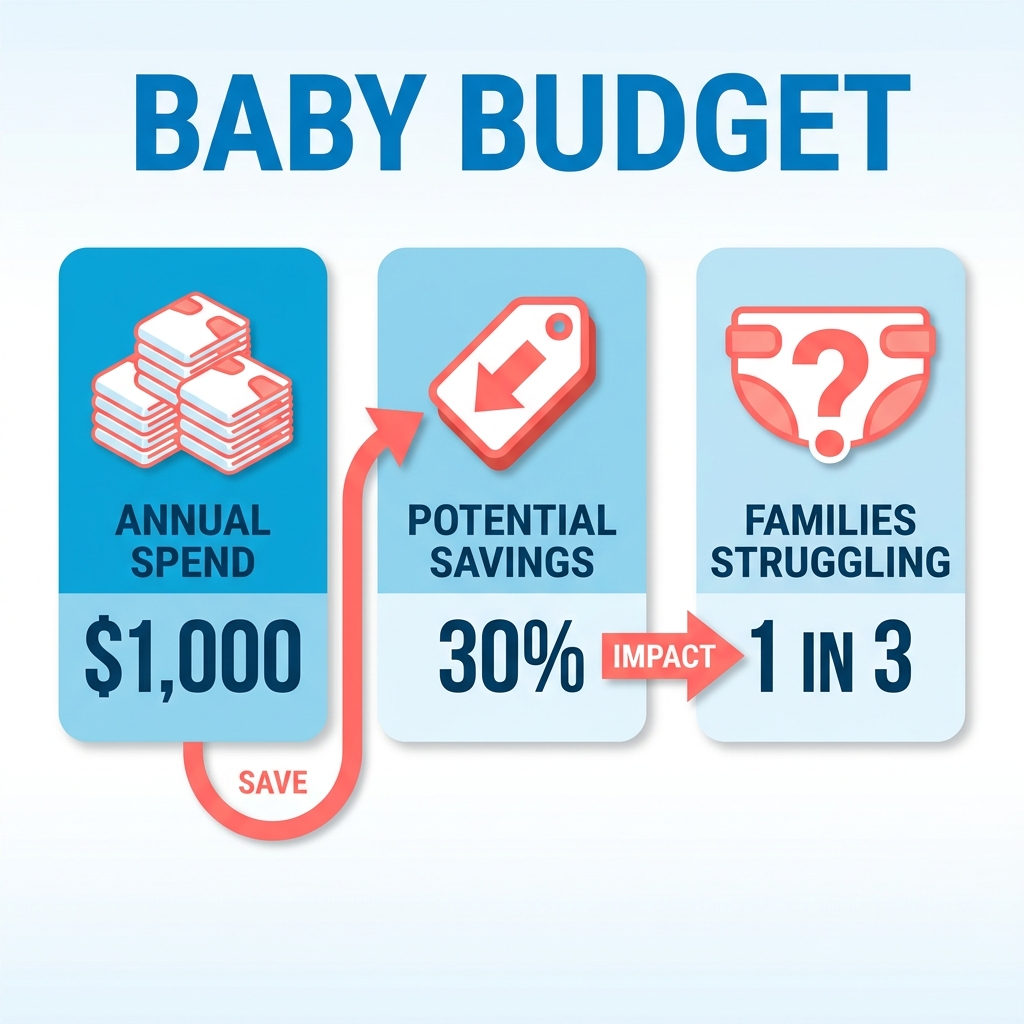
Keeping a nursery stocked forces hard trade-offs. Plenty of households end up choosing between basic hygiene products and the utility bill or the grocery run.
Why the same diaper costs more at one store than another
Retailers run different inventory and marketing playbooks, and that's why identical items carry different prices. Some stores use baby essentials as loss leaders to pull parents through the door. Others run dynamic online pricing that shifts with real-time demand. Comparing across retailers catches those gaps before you check out.
Historical pricing helps you read the game. Knowing how a retailer's prices move over weeks or months, which Choice covers well in its review of price trackers, lets you spot the cyclical discounts and skip the temporary peaks.
Packaging makes it worse. Manufacturers fiddle with box sizes and sheet counts constantly, so value is hard to judge at a glance. The unit-price approach that works for food works just as well for baby gear. Ignore the marketing claims and look at the cost of the actual material.
Why checking eight stores beats checking one
Check one store, you get one price. Check eight, you get the cheapest one. A multi-retailer search compares prices across 8 major retailers at once, so you find the lowest cost in minutes instead of opening a dozen browser tabs.
That aggregated view changes how you read value. Research on how online shoppers respond to comparison sites shows that side-by-side comparisons help people build a more accurate internal reference price, which protects them from overpaying.
A comparison table with five-plus columns puts everything in one view. Price, retailer, unit cost, package size, together. No guesswork. No mental math at midnight with a crying baby in your arms.
When you need a specific product, not just any product
Parents rarely want any product. They want the right one. Customizable filters let you set dietary restrictions, ingredient needs, or material preferences, so the results match what you actually need from the start.
A low price means nothing if the product fails your standards. Newborn sensitive skin, strict dietary rules, whatever the case, advanced search parameters keep you looking only at viable options. That's especially handy for niche items like organic formula or plant-based materials. Automated checks can cross-reference labels against your criteria, which keeps you from accidentally buying the wrong formulation.
The payoff is simple. You spend less, you buy products that fit your family, and you get back the hours you'd lose to manual price-hunting. For families counting every dollar this year, those savings stack week after week.
How to pick a diaper that actually fits and holds
Picking the right diaper comes down to three things: size, material, and absorbency. Get those right and you avoid leaks, blowouts, and skin irritation. Get them wrong and you're paying for diapers that don't fit or don't hold up overnight.
New parents hit a wall of choices here. What to Expect notes that picking a diaper can feel overwhelming when every brand makes big claims. The American Academy of Pediatrics found disposable diapers to be a convenient and hygienic option, which is why most parents start there.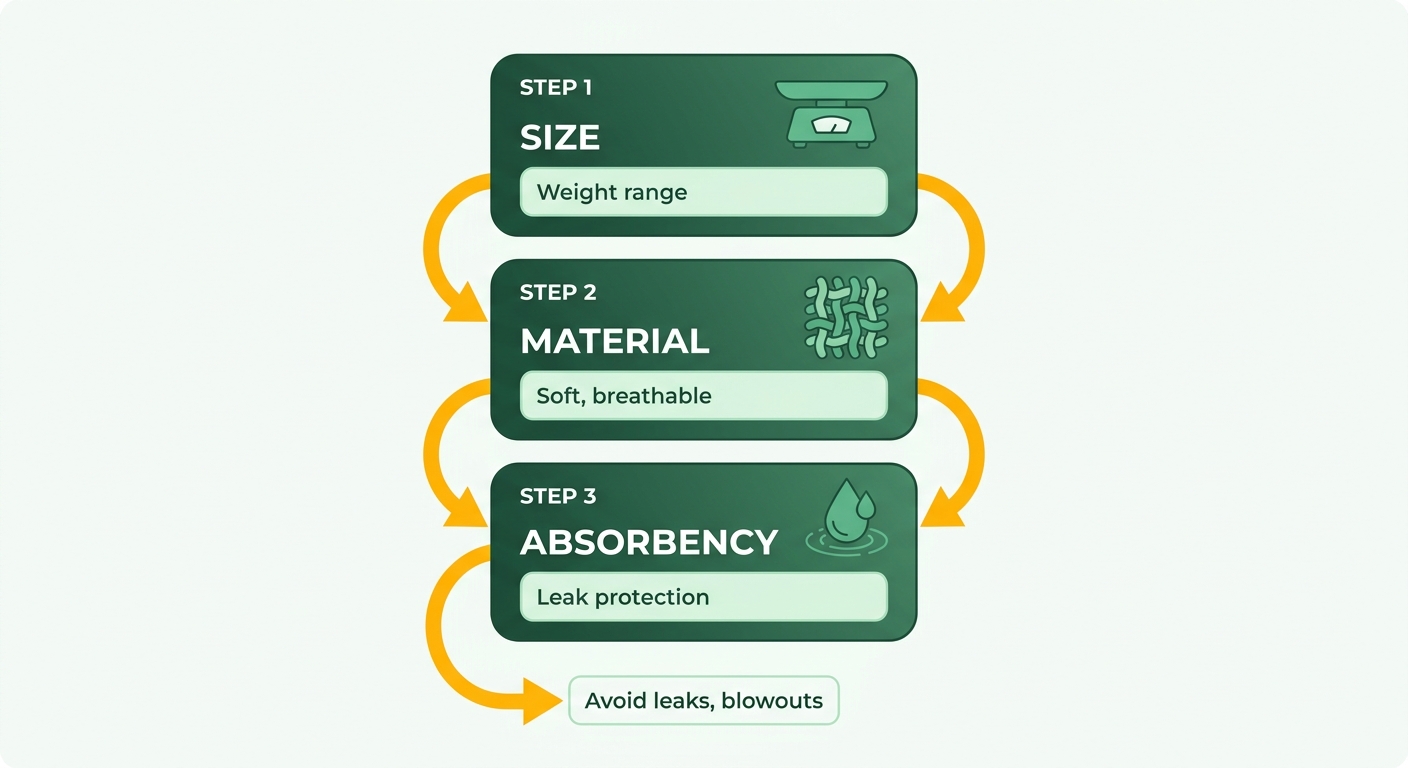
What to check before you buy
Start with size, then weigh material and absorbency against your baby's needs. Size tracks your baby's weight, not age, so read the package range. Wrong size is the number one cause of leaks.
Size: Match the weight range on the box to your baby's current weight, not their age.
Material: Soft, breathable layers if your baby has sensitive skin. Fragrance-free cuts the rash risk.
Absorbency: Overnight diapers hold more for longer stretches. Daytime diapers can run lighter and thinner.
Your baby's needs shift as they grow. The diaper that worked at three weeks won't fit at three months. Recheck the weight range every time you restock.
How Popgot narrows the field
The platform reads product descriptions and specs in real time. Need diapers with wetness indicators, chlorine-free processing, or reinforced elastic waistbands? It filters out the ones that don't match. Structured buying guides pull together top-rated options by real-world performance, so you skip the hours of reading individual reviews.
Once you've found the right diaper, the price comparison tools help you find the cheapest place to buy it. Pick the right product first. Then pay the lowest price for it.
Finding cheaper baby products in minutes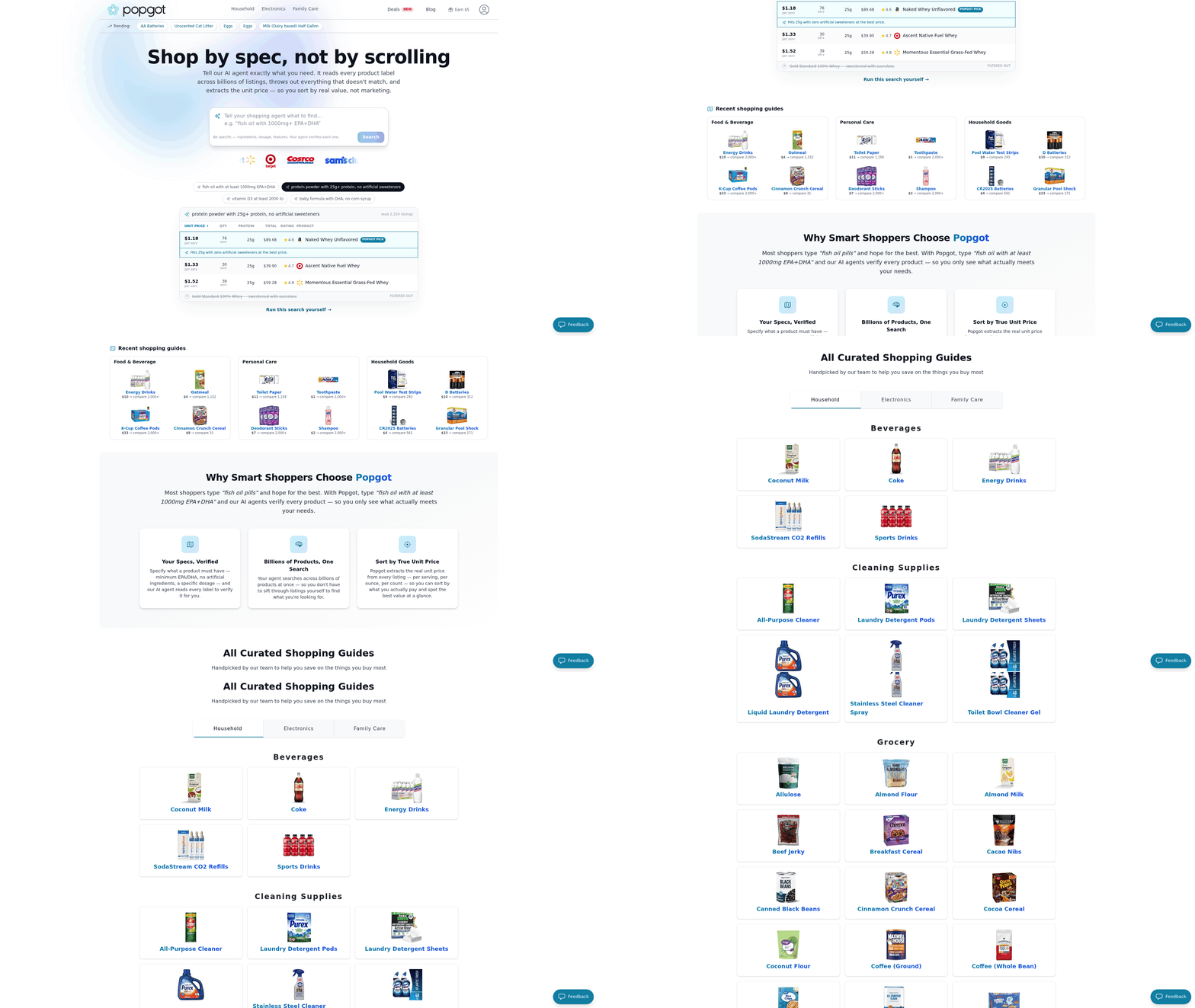
Comparing baby product prices across stores takes minutes, not hours, with the right tool. The trick is searching multiple retailers at once and reading true unit prices, so you compare apples to apples instead of guessing which package size wins.
Here's the workflow.
How multi-retailer search saves you time
The efficiency comes from automated data aggregation. Instead of clicking through a dozen e-commerce sites and tallying prices yourself, one query pulls real-time inventory and pricing from across the web into a single view.
Real-time matters because storefronts adjust prices constantly. A roundup of price comparison apps from Moonsift explains how automated tracking helps shoppers catch the fleeting deals and regional discounts that a manual search would miss.
Historical pricing in your results kills the guesswork too. Instead of wondering whether a "sale" is real, you can check the offer against the product's typical price over the past few months.
Why unit pricing is the number that matters
Sticker prices lie, mostly because of the endless variety in package configurations. Automated unit-price calculation translates every offer into one consistent metric. That's how you catch the odd cases where buying several small packs actually beats the big bulk box on cost per item.
Studies published in the Journal of Marketing confirm that showing standardized pricing metrics improves both decisions and satisfaction. Focus on those figures and you cut past the marketing to the real value every time.
How to narrow results to exactly what you need
Saved search profiles reflect your family's specific health and lifestyle preferences. Filter out the non-compliant products before you compare costs, so your final pick comes from a list of items that already meet your safety and quality standards. No more finding a great deal and then realizing it has an ingredient you wanted to avoid. For routine restocks, pre-screened product lists make it even faster.
The platform itself is straightforward. BabyCenter called it user-friendly and easy to manage, which counts for something when you're searching one-handed with a baby on your hip. Set your filters, run a search, scan the unit prices, buy. That's the whole thing.
How the ranking actually works
Ranking baby products well means more than sorting by lowest price. The method weighs three factors: price, brand, and product features. Each one gets a weight, and you control how much each counts toward the order you see.
This matters because the cheapest diaper isn't always the best buy. A pack that's cheaper per box can cost more per diaper. A budget brand might skip the absorbency you need overnight. Ranking pulls these threads together so the top result actually fits your situation.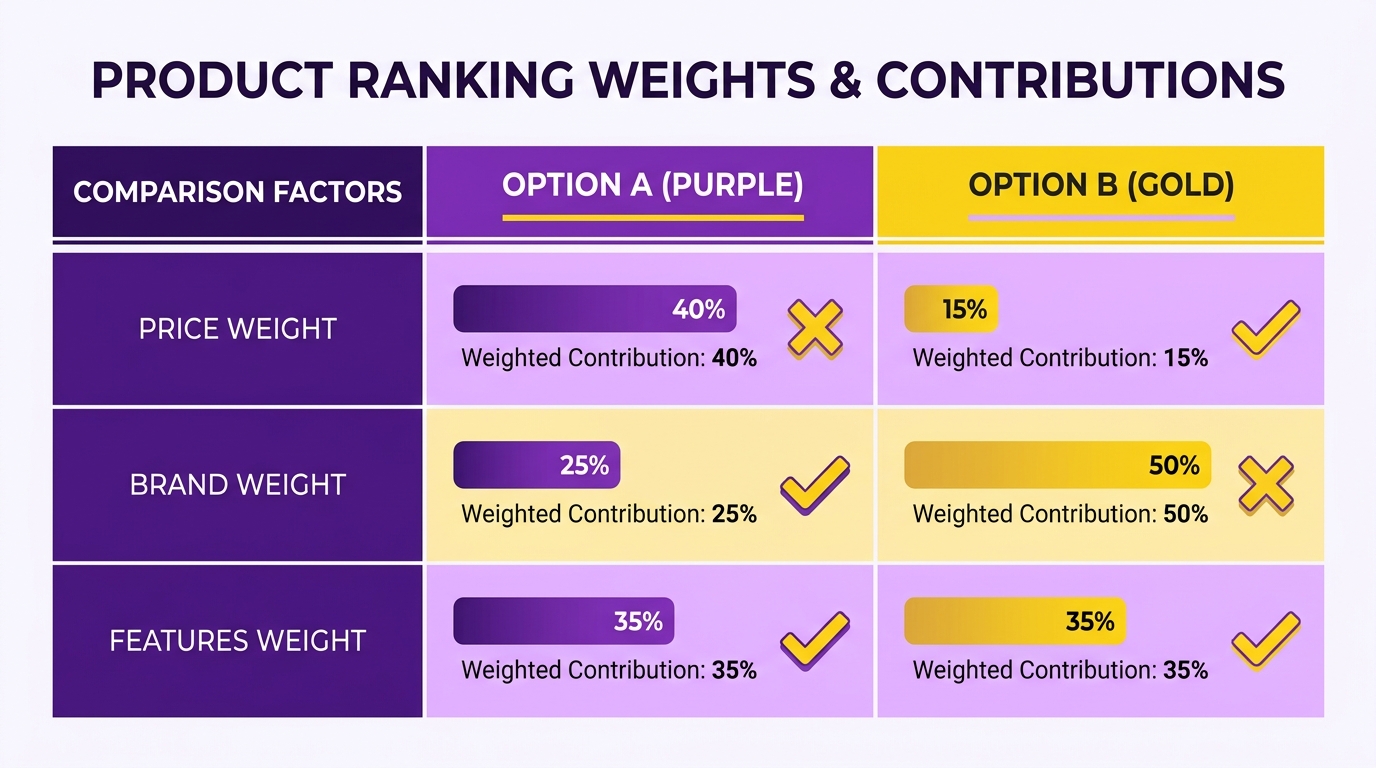
How the factors get weighted
The ranking assigns weight to each factor based on your priorities. Price might matter most to one parent. Brand loyalty or a specific feature wins for another. The weights shift to match what you tell the system you care about.
Think of it as a sliding balance. Push the weight toward price, and cheaper options rise. Care more about a trusted brand or sensitive-skin material, and those move up instead. You set the trade-off.
That's the point. A one-size-fits-all ranking ignores that every family shops differently. You set the rules, and the results follow your logic, not a hidden formula.
Why transparency in the ranking matters
When you can see why a product ranks where it does, you trust the order. When the logic is hidden, you second-guess every result and waste time double-checking.
The ranking stays open about how factors combine. You see the true unit price alongside brand and features, so nothing gets buried. No pay-to-rank tricks shoving a worse-value product to the top.
Compare that to older traditional price comparison tools, which usually left you guessing why one listing beat another. Clear logic removes the doubt.
The practical payoff is speed. You scan the top results, trust they reflect your priorities, and buy. No spreadsheet. No mental math comparing odd package sizes. Just a ranked list that already did the weighing for you.
Per-unit cost: the number that decides the winner
Per-unit cost is the real number that decides which baby product wins. It strips away the package-size tricks and shows what you pay per diaper, per wipe, or per ounce of formula. Two packs can look wildly different on the shelf and cost nearly the same once you do the math.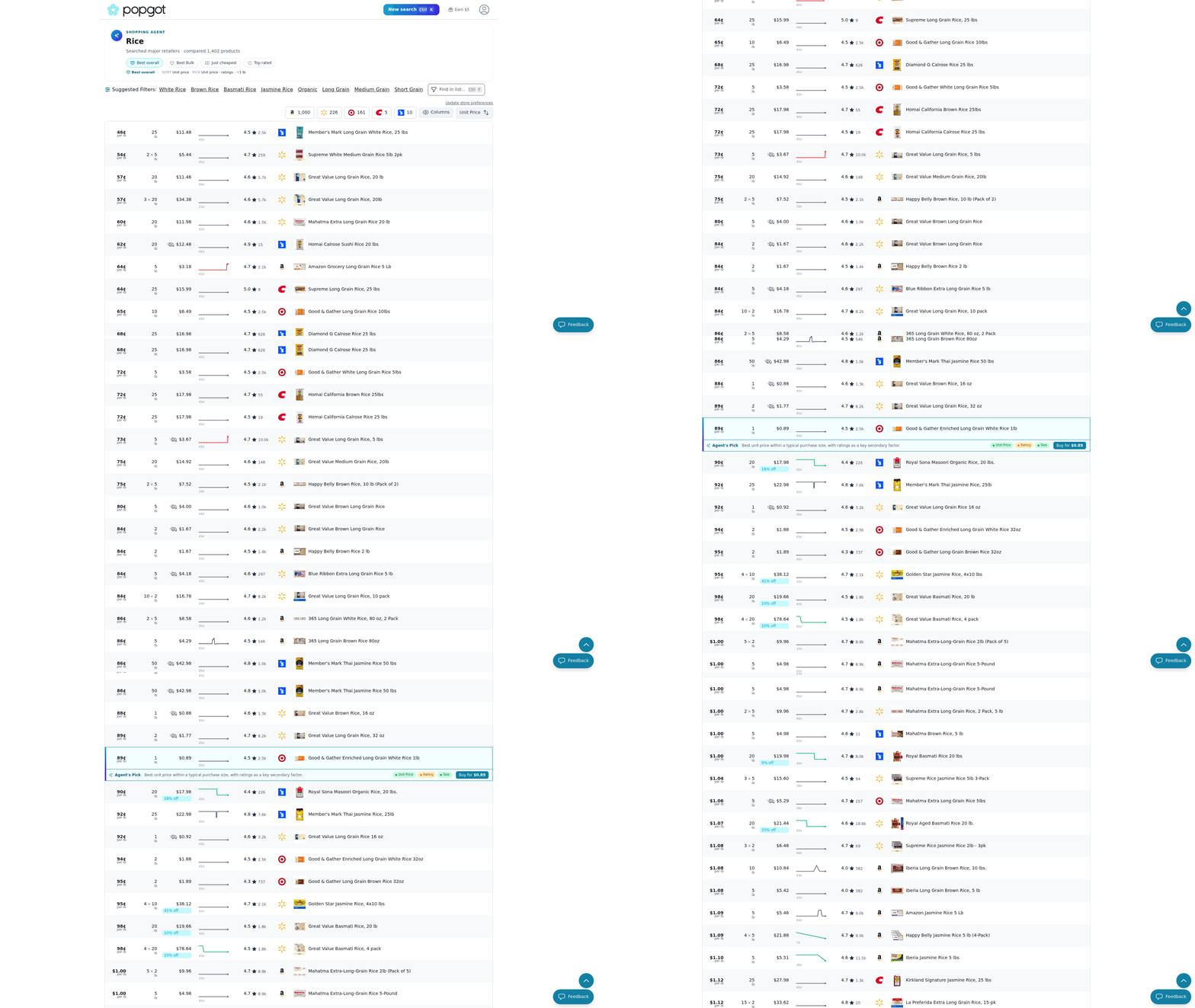
Store brands are where this math pays off fast. Store-brand diapers often cost far less per diaper than national brands, sometimes a quarter cheaper or more. For something you buy every week, that gap compounds into real money over a year.
Why store brands win on price
Store brands skip the marketing budgets and brand premiums baked into national labels. That's the core reason a retailer's own diaper line lands cheaper per unit. Parents have caught on, and store brands now pull strong loyalty in the baby aisle specifically.
National brands still earn their price for some parents. Extra absorbency, slimmer fits, wetness indicators. The point isn't that cheaper always wins. It's that you should see the per-unit difference clearly, then decide whether the extra features are worth it for your baby.
How accurate unit pricing helps
Putting every listing under one cost metric removes the confusion from different package sizes. You can line up a 120-pack from one retailer against a 144-pack from another and find the real winner without doing math by hand.
This matters because retailers price the same product differently. Pull up a popular diaper across Amazon, Walmart, and Target and the per-unit cost can swing noticeably between them. Bulk packs, store promotions, subscription discounts all move the real number.
How to use it:
- Search the product once and read the per-unit figure, not the sticker price.
- Compare store brand against national brand at the same unit measure.
- Check across retailers to catch the cheapest current per-unit deal.
Multi-retailer comparison: where families claw back real money
Checking one store at a time means you miss the best deal most of the time. Searching every retailer at once flips that. You get the full picture in a single view, and the cheapest option surfaces on its own.
This is where families claw back real money. Diapers and formula run on a weekly cycle, so even a small price gap repeats over and over across the year.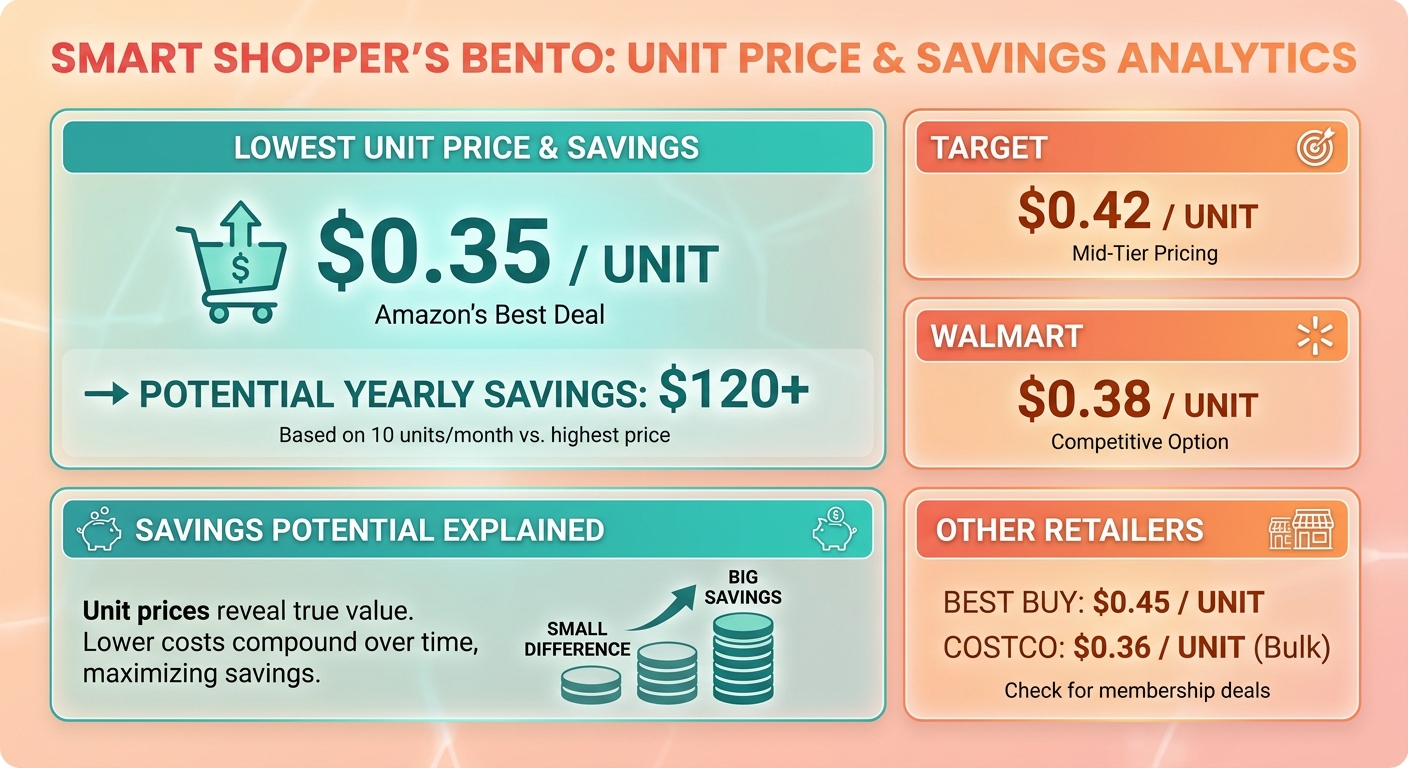
Why one search beats single-store browsing
A single search across multiple stores cuts the work from an afternoon to a few minutes. Comparison tools exist because prices move constantly between retailers, and no single store wins every category.
The main benefit is capturing how fluid retail pricing really is. Merchants rotate discounts on their own schedules, so a product that's competitive at one outlet today gets discounted somewhere else tomorrow. An aggregator catches those shifting promotions across the whole landscape in real time.
Does comparison shopping change what parents buy?
It does, by pushing you toward a more analytical approach. Faced with clear side-by-side cost metrics, parents lean less on brand familiarity and more on objective value.
That matters more for families than for one-off buyers. See the same item priced three ways and you stop anchoring on the first number you found. You start judging value instead of the shelf tag.
The effect varies by product, though. For commodity items like wipes and diapers, where one pack is interchangeable with the next, comparison pays off hardest. For a stroller you'll pick on features, price is only part of the call.
Where comparison shopping isn't worth it
Skip the comparison ritual for tiny one-off buys. If it's a single $3 item you'll never buy again, the minutes you spend comparing outweigh the cents you'd save.
The math flips on repeat buys. The savings compound week after week, which is why per-unit pricing across stores is where families should spend their attention.
What to look for in a multi-retailer search
Three things make a comparison worth your time:
- Wide retailer coverage: A bigger search net raises your odds of hitting the absolute lowest price, catching flash sales across both the giant e-commerce platforms and specialized regional merchants.
- Standardized cost metrics: The tool has to calculate the cost per unit (per wipe, per ounce) automatically, so deceptive packaging can't hide the real bargain.
- Attribute verification: A reliable system verifies every listed product against your criteria, organic certifications or hypoallergenic materials, so you never trade quality for cost.
For families buying the same baby products on repeat, Popgot's AI agent reads every label and pulls the real unit price across eight major retailers in one search. So you sort by what you actually pay, not the marketing.
The payoff is straightforward. Spend a few minutes once, and the same savings repeat on every restock for the life of the product.
References
[1] 12 best price comparison apps in 2025: Compare prices & find the ... - https://www.moonsift.com/guides/best-price-comparison-app
[2] Product price trackers compared: Can they save you money? - https://www.choice.com.au/shopping/online-shopping/buying-online/articles/price-trackers
[3] Online shoppers' response to price comparison sites | Request PDF - https://www.researchgate.net/publication/263858128_Online_shoppers'_response_to_price_comparison_sites
Frequently Asked Questions
1. How often should I re-check diaper sizing as my baby grows?
It is best to monitor fit continuously rather than relying solely on the calendar. Look for physical indicators that it is time to size up, such as red marks around your baby's thighs, frequent nighttime leaks, or the diaper waistband sitting too far below the belly button. If you notice these signs, transition to the next size even if your baby is technically within the weight range of their current box.
2. Does buying diapers in bulk always save money?
Not necessarily. While bulk packaging often yields a lower cost per unit, retailers occasionally run aggressive promotions on smaller packs that make them more economical. Additionally, consider your baby's growth rate; buying a massive bulk box right before a growth spurt can lead to wasted, unused diapers that your child has outgrown.
3. When is comparison shopping not worth the effort?
For low-cost, single-use items that you do not plan to purchase again, the time spent researching prices often exceeds the potential monetary savings. Your time has value, so it is highly efficient to focus your comparison efforts exclusively on high-frequency, recurring expenses where small margins accumulate into significant savings over time.
4. How do I shop confidently for a baby with allergies or sensitive skin?
When managing sensitivities, prioritize filtering products by specific material exclusions—such as chlorine, latex, or synthetic fragrances—before looking at prices. Once you establish a list of dermatologically safe options, you can safely compare costs across retailers, ensuring you protect both your baby's skin and your household budget.
5. How can I tell if a "sale" price is actually a genuine discount?
By examining the historical pricing baseline of an item, you can determine if a merchant has temporarily inflated the 'original' price to make a discount seem more attractive. True discounts will sit noticeably below the product's average cost over a 30- to 90-day window, helping you avoid artificial marketing promotions.
6. When are pricier national-brand diapers worth the extra cost?
Premium options are often worth the investment if your child experiences persistent diaper rash or requires specialized overnight protection that budget alternatives cannot provide. If a national brand's proprietary design prevents leaks and keeps your baby comfortable, the reduction in laundry and stress can easily outweigh the higher cost.
7. How does ranking differ from simply sorting by lowest price?
A simple price sort merely organizes items from cheapest to most expensive, often pushing low-quality or mismatched products to the top. A balanced ranking system evaluates multiple dimensions of value simultaneously, ensuring that the recommended products align with your specific quality standards while still offering competitive pricing.