
Popgot vs Manual Amazon Price Comparison for Keto Pantry Staples

Key Takeaways
- Manual Amazon searches for keto pantry staples eat 15 to 30 minutes per item once you add up label reading and per-ounce math.
- AI-verified search does the same comparison in under a minute.
- Manual shopping checks Amazon only. Verified search compares prices across up to eight retailers, including Walmart, Target, and Costco.
- The real time drain isn't scrolling. It's reading nutrition panels one by one to confirm each product actually fits keto.
- Almond flour, coconut flour, and allulose often have lookalike listings padded with added sugars or fillers.
- Verified search compares true unit prices across retailers instead of trusting single-store sticker prices.
- Off-spec listings get filtered out automatically, so you never see the junk results.
Quick Summary
Comparing keto pantry staples by hand on Amazon eats real time, and you can still miss the cheapest verified option. We ran both methods side by side. The effort gap is wide.
The bottom line: manual Amazon searching for keto staples takes 15 to 30 minutes per item once you factor in reading labels, checking net carbs, and doing per-ounce math. An AI-driven verified search does the same work in under a minute.
The two methods at a glance
| Factor | Manual Amazon Search | AI-Verified Search |
|---|---|---|
| Time per item | 15–30 min | Under 1 min |
| Retailers checked | 1 (Amazon only) | Up to 8 (Amazon, Walmart, Target, Costco, and more) |
| Label verification | You read each one | Done automatically per listing |
| Unit price math | Manual, per item | Extracted and sorted for you |
| Difficulty (1–5) | 4 (tedious) | 1 (type your spec) |
| Off-spec listings filtered | None | Hidden before you see them |
The biggest time sink with manual searching isn't the scrolling. It's reading nutrition panels one by one to confirm a product actually fits keto. A lot of low-carb alternatives hide non-keto ingredients under misleading titles.
Why verified search saves more than time
It saves money too, because it compares real unit prices across retailers, not just sticker prices. Amazon-only shopping locks you into one store's pricing. A multi-retailer search will often surface the same staple cheaper somewhere else.
A Yahoo reporter found that some pantry staples, including Blue Diamond almond flour, cost noticeably less on Amazon than at the grocery store. That's the catch: the cheapest store flips depending on the item. Check one retailer and you're guessing.
Specify "almond flour, blanched, no added ingredients," let the AI verify each label, and you skip the manual nutrition-panel reading entirely. Sort by per-ounce price. Pick the winner. For anyone managing a long staples list, that compounds fast.
Skip the manual route if you're buying more than two or three keto items at once. The label-checking overhead doesn't scale, which is exactly where automated verification earns its keep.
What you actually save in dollars
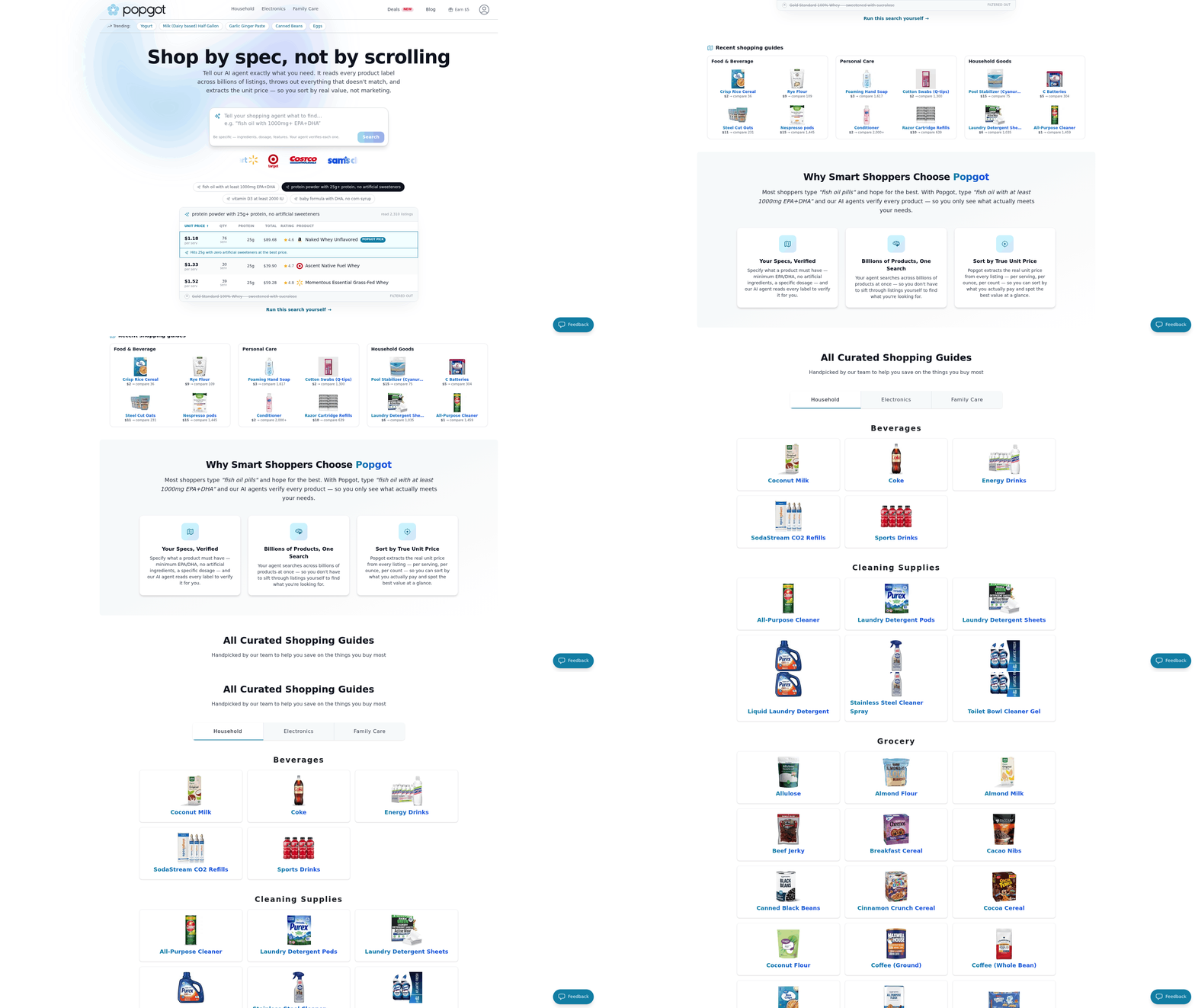
The savings add up faster than most keto shoppers expect. Switch from eyeballing prices to checking verified per-unit costs across multiple listings, and you stop overpaying on the staples you buy every week. Baking substitutes, healthy fats, low-carb snacks all show real price gaps between listings that look identical at a glance.
Some pantry staples cost noticeably less online than in stores. And for a keto pantry, high-fat and low-carb ingredients are heavy-rotation items, so even a small per-pound difference compounds across a year of cooking.
Where keto shoppers save the most
The biggest savings hit your highest-volume items. Almond flour leads, because keto baking burns through it. If you bake bread, muffins, or pancakes weekly, the per-pound price decides your monthly grocery total more than any single splurge item.
Here's where the math matters. Two almond flour listings can show the same sticker price but hold different package weights. One's a 3-pound bag. The other's a 1-pound bag dressed up to look like a deal. The per-ounce price is the only number that tells the truth, and it's the number manual searching makes you calculate by hand.
Versus searching by hand
Manual comparison forces you to open each listing, find the weight, and divide. Miss one cheaper option and you've overpaid on something you'll reorder for months. A verified per-unit comparison surfaces the lowest true cost instantly, so the savings are baked in before you add to cart.
The time cost is real too. Checking unit prices by hand across several brands eats minutes you don't have. A faster way to compare Amazon items does the per-unit math and ranks results by actual cost.
For keto dieters watching both macros and budget, that combination matters. You're already reading labels for net carbs. Adding verified unit-price data on top means you protect your wallet without a second round of manual work.
Understanding Keto Pantry Staples
Keto pantry staples are the low-carb, high-fat ingredients you keep on hand to cook keto meals without last-minute grocery runs. They replace the flours, sugars, and starches keto cuts out. Stock them well and you can make bread, sauces, and snacks that fit your macros any day of the week.
They matter because keto restricts carbs to a tight daily limit. You can't reach for regular flour or sugar, so you need substitutes that keep net carbs low while still cooking and baking like the real thing.
The staples most keto kitchens run on
The core keto pantry runs on flour alternatives, healthy fats, and protein-based snacks. These are the repeat buys, because nearly every recipe depends on them.
- Almond flour: a low-carb base for bread, pancakes, and breading. The primary wheat substitute in most keto recipes.
- Coconut flour: dense, fiber-rich, and thirsty. You use far less per recipe than almond flour.
- Coconut oil: a stable cooking fat for frying, roasting, and adding fat to coffee or smoothies.
- MCT oil: a fast-digesting fat keto dieters add to drinks and dressings for quick energy.
- Pork rinds: a zero-carb crunchy snack that doubles as breading or a crouton swap.
Each earns its shelf space by solving a specific keto problem. Almond and coconut flour replace wheat. Coconut oil and MCT oil hit your fat targets. Pork rinds give you crunch without carbs.
Why these staples anchor the diet
They make low-carb cooking repeatable. When the right ingredients sit in your cabinet, you don't fall back on high-carb convenience food when you're hungry and short on time.
Almond flour gets the heaviest rotation, since keto baking leans on it constantly. That high usage is also why per-pound price gaps matter so much. A few cents compounds fast across a year of baking.
Buying these online lets you check verified unit prices instead of guessing at the shelf. The Popgot blog covers unit-price shopping tips for staples like these if you want to see how it works in practice.
Time and Effort Savings with Popgot
Manual price comparison eats time you don't have. Checking one keto staple by hand means opening multiple listings, reading every label, hunting for net carbs, and dividing price by ounces. Do that across a full pantry list and a quick shop turns into an afternoon project.
AI-verified search collapses that work. Instead of burning an afternoon cross-referencing tabs, you get the same per-unit comparison in seconds. Multiply across your whole list and the saved time stacks up.
How much time you actually save
A 10-item keto pantry list checked by hand can run two to three hours. The same list compared automatically runs in a few minutes. No tab-juggling, no label-squinting, no manual per-ounce arithmetic.
The bigger win is repeat work. For high-rotation items, the manual process repeats every shopping trip. You re-check almond flour prices this week, again next week, again the week after. Automated comparison handles that repeat work, so the savings compound over months, not just one trip.
Restocking allulose and avocado oil mayonnaise on the same order? By hand, that's two separate research sessions, each with its own label reading and carb-checking. Compared automatically, both land in front of you side by side, sorted by true per-unit cost, before you'd have finished reading the first product page.
Why this matters for staying on plan
Keto runs on consistency, and consistency depends on a stocked pantry. When price comparison is fast, you restock more often and run out less. Slow, tedious comparison is what makes people give up and overpay, or skip the staple entirely.
The point isn't just saving minutes. It's removing the friction that breaks a keto routine. When checking net carbs and per-ounce cost takes seconds, you stay on plan without the mental tax.
More on cutting this work down in Save Time Comparing Amazon Items with Popgot. The goal is simple: do the boring math once, automatically, and spend your time cooking.
Unit Pricing Accuracy and Transparency
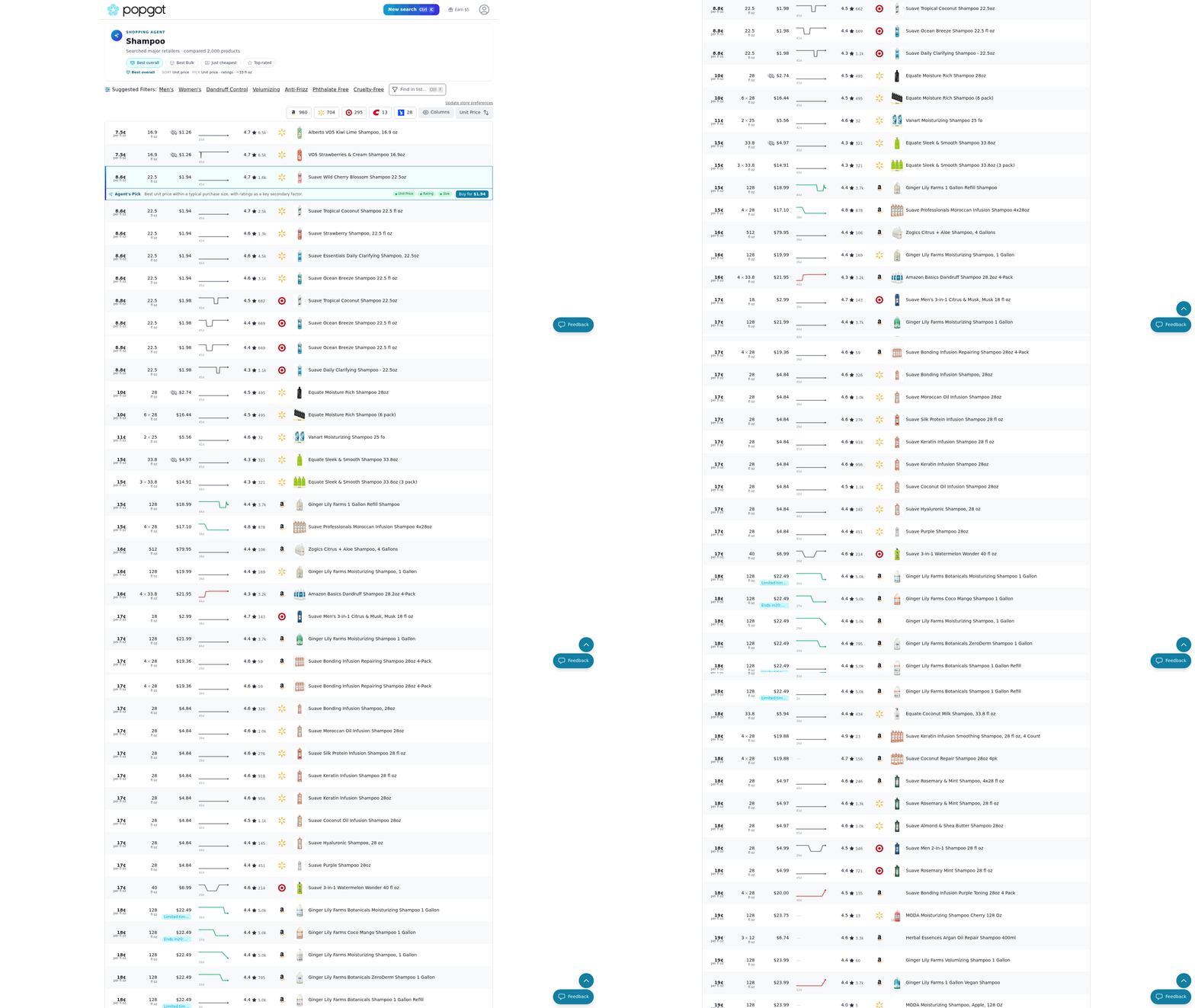
Unit pricing accuracy is the difference between a deal that looks good and a deal that actually saves money. The number on a listing tells you almost nothing on its own. What matters is the cost per ounce or cost per pound, because that's the number you can compare across listings that come in different sizes.
Keto staples make this especially tricky. MCT oil shows up in a 16-ounce bottle, a 32-ounce jug, and a bulk multipack, each wearing a sticker price that buries the real per-ounce cost. A bigger container isn't always cheaper per ounce, and a "sale" price can still lose to a quieter listing once you do the math.
Why unit pricing matters for keto
Keto staples are bought in bulk and on repeat. A few cents per ounce on almond flour or MCT oil compounds across a year of baking and cooking. The listed price hides this. Only the per-unit cost shows which option actually wins.
Coconut flour is the classic trap. One listing shows a lower total price but packs fewer ounces, while a higher-priced bag delivers more flour per dollar. Without the per-ounce figure, you'd grab the cheaper-looking option and quietly overpay every time you restock.
Pork rinds and MCT oil follow the same pattern. Bigger containers tempt you with a lower per-ounce rate, but not always. Transparent unit pricing strips out the guesswork so you compare apples to apples.
Why visible per-unit math builds trust
When you can see the cost per ounce spelled out next to every listing, you stop second-guessing whether a size difference is tricking you. That transparency is what turns a quick comparison into a confident buy.
That's the core of what a unit-price tool does for keto pantry stocking. It pulls the real per-unit cost across listings so you're not squinting at bag sizes or running division in your head. The payoff: you buy the staple that's genuinely cheapest per ounce, not the one that just looks cheapest.
Manual Amazon Price Comparison Workflow
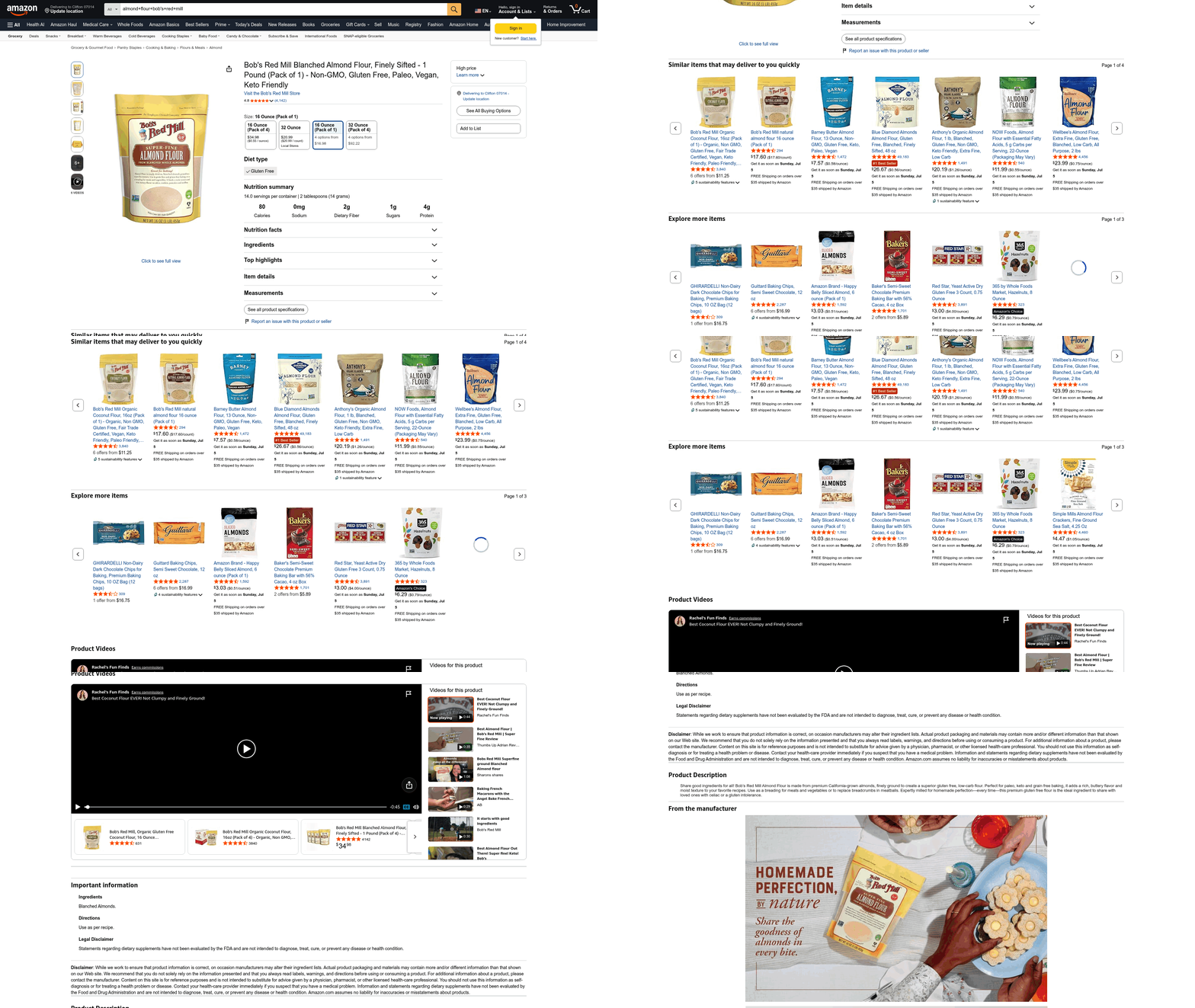
Manual Amazon price comparison means searching each keto staple by hand, opening multiple listings, reading labels, and doing per-unit math yourself. It works. It's just slow. A full pantry list demands real labor before you've added a single item to your cart.
Here's the workflow most keto shoppers actually follow.
The five-step manual loop
You search, open listings, read labels, calculate per-unit cost, then compare. Repeat for every staple. Each loop takes real focus, and the work compounds across a 10-item run.
-
Search the staple. Type "almond flour" or "MCT oil" into Amazon. You get dozens of listings at different sizes and prices, sponsored results mixed in.
-
Open several listings in tabs. One result is never enough. You need three or four to spot a real price spread, so the tab-juggling starts.
-
Read each label for net carbs. Keto shopping lives or dies on net carbs. You check the nutrition panel image on every listing, which usually means zooming in on a photo.
-
Calculate cost per ounce. Divide price by package weight for each option. And the weight hides in different spots, sometimes the title, sometimes the bullets, sometimes only the label image, so you hunt for the number before you can even start dividing.
-
Compare and pick. Stack your per-ounce numbers side by side and choose the cheapest verified option that fits your macros.
Where doing it by hand breaks down
Two failure points: data completeness and human error. You only check the listings you have patience to open, so cheaper options stay buried. Tired math produces wrong per-ounce numbers. And a sponsored listing pulls your eye off the real best buy.
The cost gaps are real. Specialty baking ingredients, cooking fats, and low-carb snacks all show price spreads between near-identical listings, and you only catch them if you check each one. That's the trade-off built into doing it yourself.
Popgot's AI-Driven Product Verification
AI-driven verification confirms a listing actually matches what you're shopping for before it gets compared. For keto staples, that means checking the product type, size, and per-unit price so you're comparing real equivalents, not just listings that share a keyword.
This matters because keto shopping runs on close calls. Two almond flour listings can look identical but differ in bag size, net carbs, and true cost per pound. Verification sorts that out before you ever see a recommendation.
How verification works for keto staples
It reads the listing details and confirms the match before ranking it by unit price. It pulls the size, the price, and the product identity, then calculates cost per ounce or per pound so equivalent items line up side by side. You get a clean comparison instead of a pile of near-matches.
MCT oil is a good example. One seller's listing might describe a blend cut with coconut oil, while another lists pure C8 at the same headline price. Verification reads past the title to confirm the products are genuinely the same type, so the cost-per-ounce ranking reflects a true match rather than two different formulas.
Same logic across all the dry goods and liquid fats. Each comes in multiple sizes from multiple sellers, which is exactly why automated matching is the only way to get meaningful per-unit math.
Why accuracy pays off
A verified match means you're not paying a premium on a listing that only looked like a deal. Over a year of baking and snacking, that precision keeps real money in your pocket.
Verification also confirms you're getting the exact product you specified, not a similarly named substitute that might contain hidden starches. When you compare items on Amazon this way, the tedious checking is done for you, so the listing you add to your cart is the one that earned the top spot.
Multi-Retailer Search vs Single-Retailer Focus
Searching one retailer means you only see one retailer's prices. That's the core limitation. Price-check almond flour on a single site and you're comparing listings against each other, not against the wider market. A cheaper verified option somewhere else stays invisible.
Multi-retailer search fixes that blind spot. Instead of trusting that one storefront has the best deal, you compare the same staple across several sellers and rank them by true cost per ounce. The cheapest verified match wins, wherever it lives.
Why single-retailer focus costs you money
You see that store's sale tags, that store's bulk sizes, that store's stock. You never learn whether a coconut listing runs cheaper per pound somewhere else, so you can overpay without ever knowing it.
This hurts most on repeat-buy staples. Keto pantries lean on the same handful of ingredients week after week. A few cents per ounce on almond flour looks trivial on one bag. Across a year of baking, those cents stack into real money you handed over for no reason.
Some staples genuinely land cheaper online than in the store, which is why limiting your search to one place backfires. Online prices shift often, and the best deal moves between sellers. Lock onto one and you're betting it always wins. It doesn't.
How Popgot compares across retailers
Popgot compares keto staples by verified unit price, then surfaces the cheapest real match instead of the first listing you happen to open. You get a per-ounce ranking across options, not a single-store guess. Restocking a mix of crunchy snacks, cooking oils, and baking flours? Each might have its best price under a different seller. A multi-retailer search catches all three lows in one pass. A single-store look catches at most one.
That's the budget impact. Every staple bought at its verified lowest per-unit cost trims the weekly grocery bill, and the savings compound on the items you buy on repeat. You can dig into the unit-price approach on the Popgot blog.
Why Keto Pantry Staples Price Comparison Matters
Keto pantry staples cost more to maintain than most diets, because nearly every ingredient is a specialty product. Almond flour, MCT oil, and pork rinds carry premium prices, and you buy them on repeat. That makes price comparison less of a nice-to-have and more of a budget defense.
The keto market keeps pulling in new shoppers, and demand for low-carb flours, fats, and snacks has climbed with it. More demand means more listings, more sizes, more confusing pricing. The wider the field, the harder it is to spot the cheapest verified option by eye.
Who benefits most
The heaviest keto cooks save the most. If you bake bread, make sauces, and snack on protein staples every week, you're buying these ingredients in volume. A few cents per ounce on almond flour or coconut flour compounds across a year of recipes.
Shoppers stocking a full pantry feel it too. Buy eight or ten staples in one run and small per-unit differences stack into real money. Newcomers benefit by avoiding overpriced "starter" listings that look convenient but lose on cost per pound.
For a heavy-rotation ingredient, even a minor price gap matters every time you restock. That's what makes automated comparison worth it for long-term budgeting.
Why accurate comparison protects your budget
The sticker price hides the real cost. Two listings can look identical and differ in bag size, net carbs, and true cost per ounce. Without verified per-unit math, you're guessing.
That guessing gets expensive over a year. A staple you overpay for once is a staple you overpay for fifty times. Verified comparison catches the cheaper match before it slips past you.
The challenge is doing this fast across many products and many sellers. That's where AI-driven verification and multi-retailer search earn their keep, confirming each match and ranking it by true unit price so the right listing rises to the top.
References
[1] These pantry staples are cheaper on Amazon — here's what to buy ... - https://creators.yahoo.com/lifestyle/story/these-pantry-staples-are-cheaper-on-amazon--heres-what-to-buy-online-032647743.html
Frequently Asked Questions
1. How do I read net carbs correctly on keto flour labels?
Subtract fiber and sugar alcohols like erythritol from total carbohydrates to get net carbs. On almond and coconut flour, watch for added sugars or starch fillers hidden in the ingredient list, which inflate net carbs. Verified search reads these panels automatically, flagging products that don't fit keto macros.
2. Is C8 MCT oil better than a coconut-blend MCT oil for keto?
Pure C8 (caprylic acid) MCT oil converts to ketones faster than blends cut with coconut oil or C10/C12 fats. Two listings may share the same headline price while offering different formulas. Always confirm the oil type before comparing cost per ounce, since blends often cost less but deliver fewer ketones.
3. Does buying keto staples in bulk always save money per ounce?
Bulk packaging doesn't guarantee a lower per-ounce price. A 32-ounce MCT oil jug or multipack can cost more per ounce than a smaller bottle on sale. The only reliable way to know is calculating cost per ounce for each size, which automated unit-price tools do instantly.
4. Why does coconut flour cost more per recipe than almond flour despite being cheaper per bag?
Coconut flour is dense and absorbs liquid aggressively, so recipes use far less of it than almond flour. A cheaper bag can still cost more per finished dish if you also need extra eggs and liquids to compensate. Compare cost per recipe, not just per bag, when budgeting.
5. Can sponsored Amazon listings trick me into overpaying for keto staples?
Sponsored listings appear at the top of search results regardless of whether they offer the best per-ounce price. They pull attention away from cheaper verified options buried below. Manual searching makes this easy to miss, while verified search filters off-spec results and ranks by true unit cost instead of ad placement.
6. How often should I re-check keto staple prices if they change frequently?
Online prices shift often, and the cheapest seller rotates between retailers week to week. For high-rotation items like almond flour and MCT oil, re-checking every restock catches new lows. Automated multi-retailer comparison handles this repeat work in seconds, so you don't overpay on staples you reorder month after month.
7. Are pork rinds genuinely zero-carb, or do some brands add carbs?
Plain pork rinds are naturally zero-carb, but flavored varieties can sneak in sugar, maltodextrin, or starch-based seasonings that add carbs. Barbecue and sweet-flavored options are common offenders. Check the ingredient list, not just the front label, since "keto-friendly" marketing doesn't always match the actual nutrition panel.