
Rank High-Protein Staples by Grams Per Dollar Across Stores

Key Takeaways
- The cost of getting 30 grams of protein swings roughly sevenfold across staples, from $0.98 for TVP to $6.98 for liquid egg whites.
- TVP tops the value ranking at about 30.6 grams of protein per dollar, costing just $0.98 per 30-gram serving.
- Plant proteins and eggs dominate the top of the value list. Pre-portioned convenience formats sit at the bottom.
- Dried lentils and black beans rank second and third, delivering roughly 27.3 and 24.0 grams of protein per dollar.
- Eggs still hold up at $1.60 per 30 grams, or about 18.8 grams of protein per dollar.
- Supermarket pricing research found at least 10 food categories beat frozen chicken on cost per gram of protein.
- Canned tuna and whole milk round out the top staples at roughly 15.0 and 13.0 grams per dollar.
Quick Summary
If you're building a low carb grocery list, protein is where most of your budget goes. And the gap between the cheapest and priciest sources is wider than most people expect. The cost of getting 30 grams of protein swings roughly sevenfold across common staples, from about $0.98 for TVP to $6.98 for liquid egg whites, according to protein sources ranked by cost. That spread means your protein dollar can stretch three, four, even five times further depending on what lands in your cart.
We ranked high-protein staples by grams of protein per dollar across major grocery stores so you can spot value fast. The pattern is clear: plant proteins and eggs dominate the top, while pre-portioned convenience formats sit at the bottom. Researchers found the same thing in supermarket protein pricing, where at least 10 food categories beat frozen chicken on cost per gram.
Which protein staples deliver the most grams per dollar?
The best value comes from dried legumes, TVP, eggs, canned tuna, and whole milk. High protein, low price. Convenience formats like liquid egg whites and pre-cooked pouches cost the most per gram. Here's how the top staples stack up.
| Rank | Staple | Approx. Cost per 30g protein | Grams per dollar |
|---|---|---|---|
| 1 | TVP (textured vegetable protein) | $0.98 | ~30.6 |
| 2 | Dried lentils | $1.10 | ~27.3 |
| 3 | Dried black beans | $1.25 | ~24.0 |
| 4 | Eggs | $1.60 | ~18.8 |
| 5 | Canned tuna | $2.00 | ~15.0 |
| 6 | Whole milk | $2.30 | ~13.0 |
| 7 | Peanut butter | $2.60 | ~11.5 |
| 8 | Chicken thighs | $3.10 | ~9.7 |
| 9 | Greek yogurt | $4.50 | ~6.7 |
| 10 | Liquid egg whites | $6.98 | ~4.3 |
One caveat on the table. The two anchor prices ($0.98 and $6.98) come straight from the cost-per-30g breakdown. The middle rows are illustrative estimates meant to show the shape of the value curve, so treat them as ballpark, not gospel.
How much time and effort does this take?
Finding the best deals takes about 20 to 40 minutes if you check unit prices by hand across a few stores. The math isn't hard. The problem is that stores list protein prices by package, not by gram, so you have to convert everything yourself.
Time estimate: 20-40 minutes for a manual cross-store check of 8-10 staples.
Difficulty: Moderate. The friction is in normalizing prices. Flagging protein content per serving and dividing by cost is tedious across multiple retailers.
Warehouse stores usually win on bulk staples like dried beans and eggs. A mid-size grocery run is fine for tuna and milk. If your goal is pure cost efficiency, skip the pre-portioned and ready-to-eat formats entirely. The convenience premium wipes out any protein value they offer.
Best Value Picks for Each Store
The best value picks come down to matching the right protein to the right kind of store. Warehouse clubs win on bulk eggs and canned fish. Discount grocers win on dried legumes and tofu. Mainstream supermarkets win when their loyalty apps drop weekly digital coupons. Sort your low carb grocery list by store type first, and your cost per gram falls before you've compared a single price tag.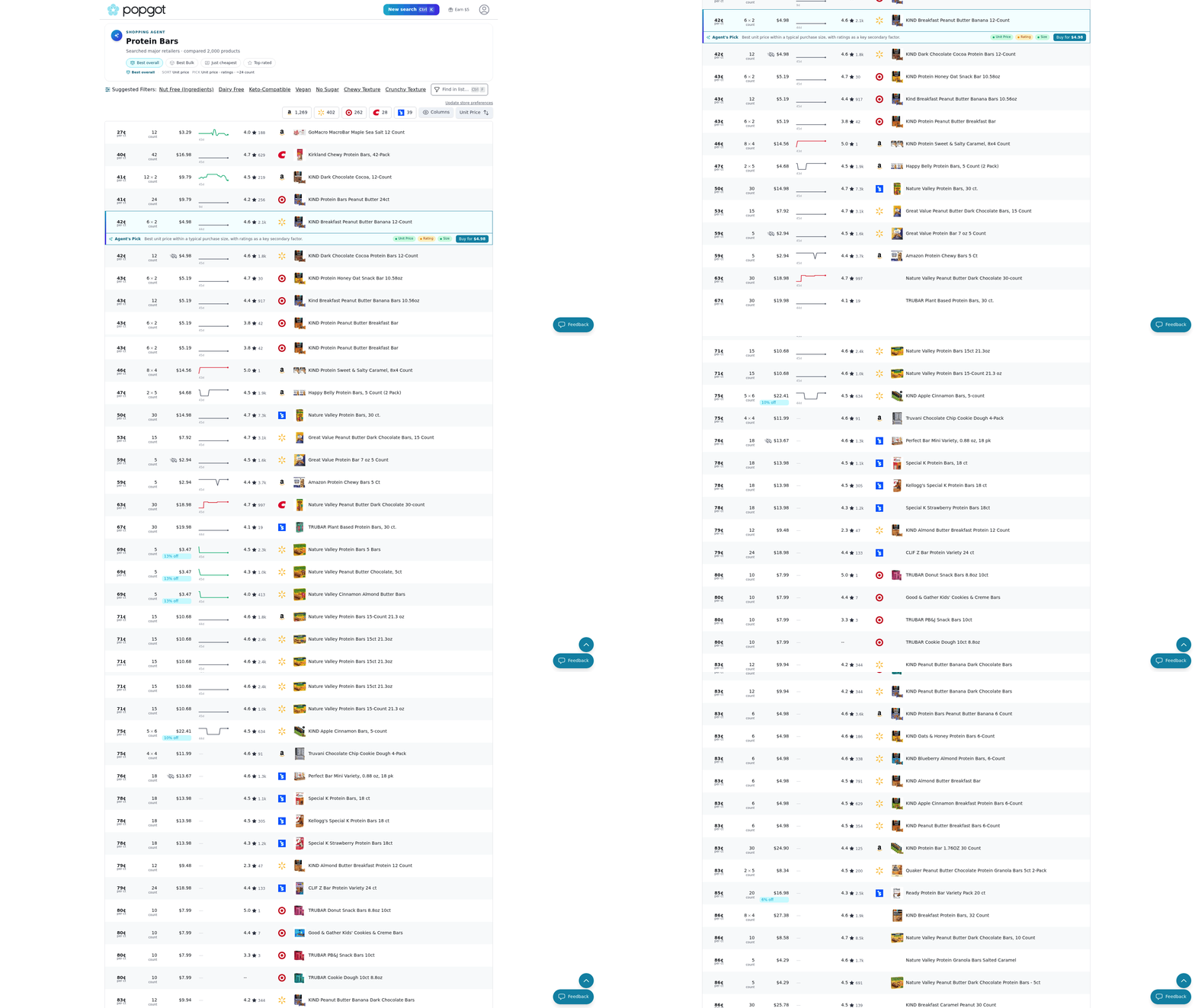
The practical rule for a low-carb grocery run: buy shelf-stable proteins where volume is cheapest, and buy perishables where turnover is fastest. That split alone protects your budget more than chasing one "cheapest store." The research backs it. A supermarket-price analysis found ten food categories offer highly competitive rates on raw protein yield, which means budget shoppers have plenty of viable alternatives to standard poultry.
Which store wins for each protein type?
Match the protein to the store's strength, not the other way around. Warehouse clubs price bulk perishables lowest per unit. Discount chains beat everyone on dry goods. Full-service supermarkets close the gap only through app-based deals.
- Warehouse clubs: Best for large egg flats, canned tuna and salmon multipacks, and rotisserie chicken. The per-serving cost drops sharply once you buy in volume.
- Discount grocers: Best for dried lentils, black beans, and block tofu. These stores keep dry-goods margins thin and rarely charge a brand premium.
- Mainstream supermarkets: Best when a loyalty coupon lands on Greek yogurt, cottage cheese, or fresh chicken thighs. Without the coupon, you overpay.
The cost-per-30-grams comparison shows how processing and packaging inflate shelf prices. The exact same food can cost significantly more in a single-serve format.
How do loyalty programs and sales change the math?
Loyalty programs and sales cycles can flip a store's ranking overnight. A protein that's mid-priced most weeks becomes the cheapest option the moment a digital coupon or club discount hits. Time your buys around those cycles instead of buying on demand.
Stock the shelf-stable stuff during sales. Canned fish, dried beans, and long-life tofu keep for months, so buy heavy when the price drops and skip it when it doesn't. Perishables are different. Only load up on yogurt or fresh poultry when a coupon offsets the spoilage risk.
Example: Greek yogurt sits at a middling grams-per-dollar rank most weeks. A loyalty-app discount can push it past canned tuna for that week alone. Buy two weeks' worth then, and skip it entirely once the deal expires.
Can price matching stretch your dollar further?
Price matching lets you claim the lowest advertised price without driving to a second store. Bring the competing ad, the cashier honors it. That turns one convenient store into the effective price leader for your whole cart.
The savings compound when you pair matching with granular, item-level price tracking rather than store-wide averages. A granular price-matching approach catches the specific SKU deals that broad comparisons miss.
Skip price matching on items already at their category floor. Dried legumes and TVP rarely have a lower advertised price worth chasing. Save the effort for higher-ticket proteins where a single match covers your time.
Why grams-per-dollar beats price-per-pound
High-protein staples earn their spot on any healthy diet because protein does the heaviest lifting: it repairs muscle, keeps you full, and steadies your energy between meals. When you plan a menu, protein is the anchor everything else builds around. Get the staples right and the rest of your cart falls into place.
The hard part is affordability. Health-conscious shoppers keep hitting the same wall. The protein sources they trust often cost more than they want to spend, and prices swing wildly from store to store. That's exactly why grams of protein per dollar beats price-per-pound as a metric for a smart low-carb grocery run.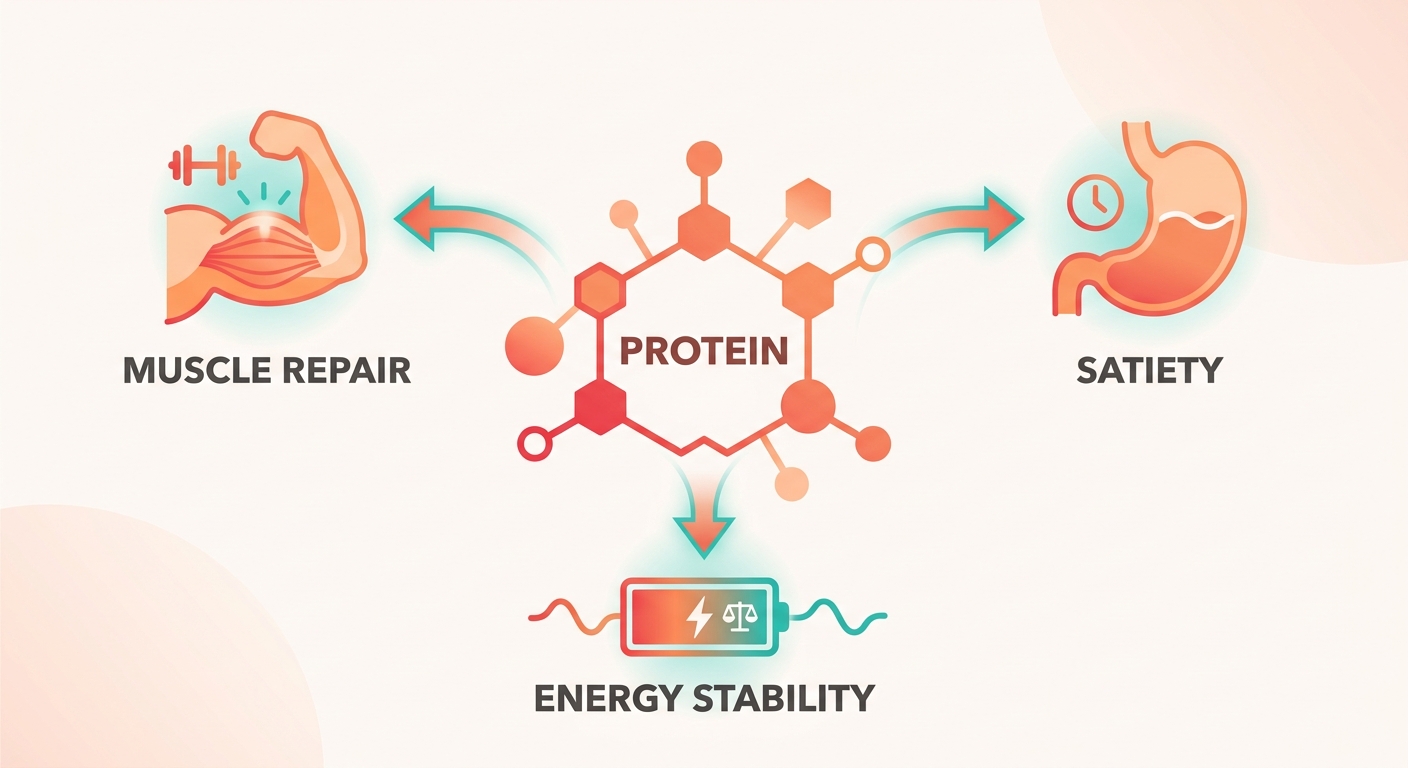
Why does adequate protein intake matter?
Protein is the one macronutrient your body can't store for later, so you need a steady supply every day. Fall short and you get slower muscle recovery, weaker satiety, and blood sugar that spikes and crashes. Staples like eggs, legumes, and dairy give you that supply without piling on carbs.
Whole grains can pull double duty here too. Rolled oats sell in bulk for around $1.30 per pound and carry more protein than most other grains, per Healthline's cheap protein guide. That makes them a rare staple that stretches both your protein and your budget, even if they're not strictly low-carb.
What makes affordable protein so hard to find?
Nutrient-dense foods aren't priced by their nutrition. They're priced by weight, brand, and store markup. A shopper comparing two packages by sticker price alone has no way to see which one delivers more protein per dollar.
Researchers have tried to fix this gap. One approach standardizes food costs by weight, energy, and protein content so you can compare items on equal footing, an idea laid out in this affordable nutrient density study. The finding is blunt: affordable nutrient density signals real access to a sustainable healthy diet.
That's the crux of it. Two foods can cost the same per pound while one delivers twice the usable protein. Without normalizing for protein content, you're guessing.
How does technology simplify the comparison?
Price-comparison tools do the math you'd otherwise do by hand across a dozen tabs. They pull live prices from multiple stores, then rank staples so you see the best protein value before you shop. An hour of spreadsheet work turns into a few seconds.
For a sense of which product attributes actually matter when you're optimizing for value, this checklist for health-conscious shoppers breaks down what to weigh beyond raw price.
My take: skip the store-hopping if you're only chasing one or two staples. The savings rarely cover the gas. Comparison tools pay off most when you're stocking a full week of protein and small per-gram gaps add up across ten or fifteen items.
Store-by-Store Protein Value Rankings
No single store wins every protein category, so it pays to split purchases across three store types: warehouse clubs, discount grocers, and mainstream supermarkets. Each one owns a lane. Match the protein to the lane and your cost per gram drops fast.
Ranking by store matters because the same protein carries wildly different price tags depending on where it sits on the shelf. Standardizing food cost by protein content, not just weight or calories, reshuffles the whole ranking. Foods with high water or fat content can end up costing more per nutrient unit than they appear to on the surface. Sorting your low-carb grocery run this way is the fastest path to value.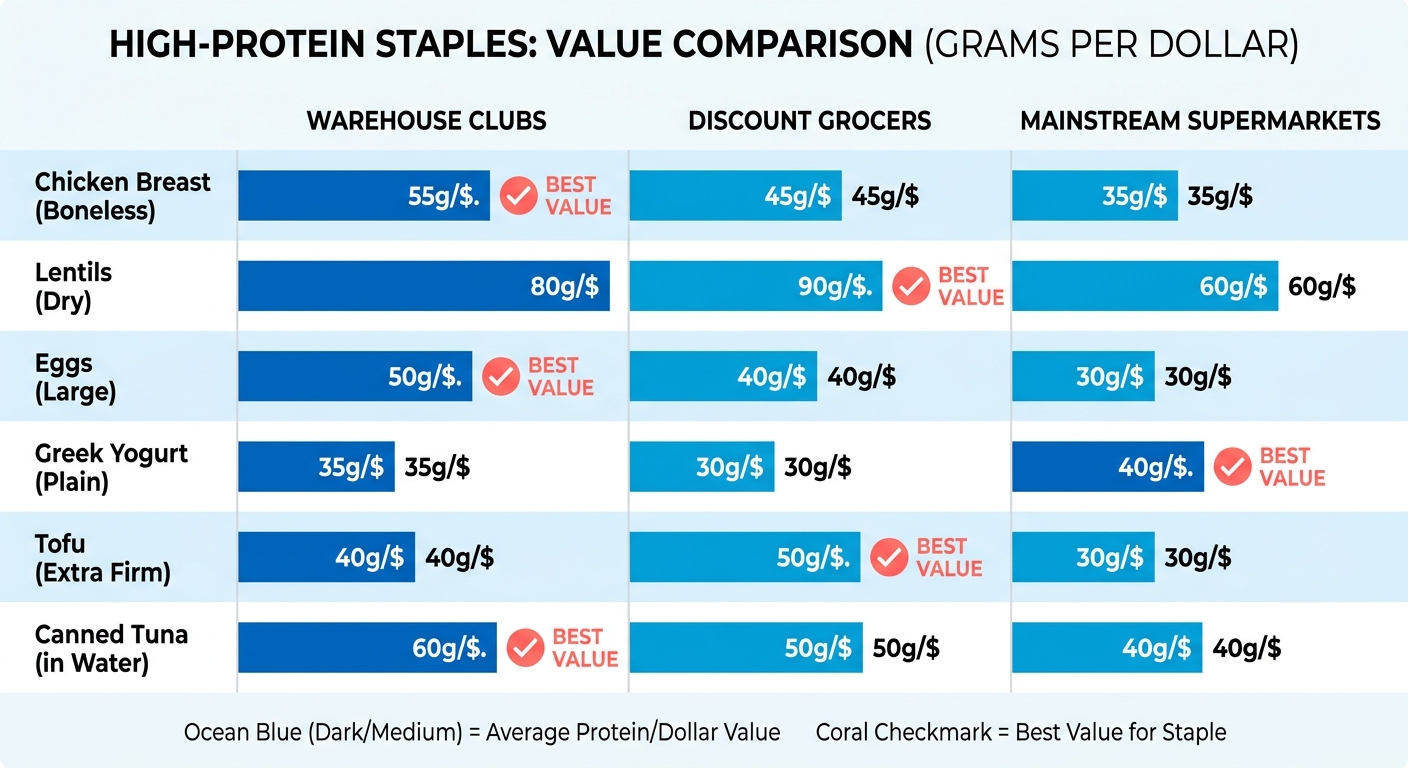
Which stores win on bulk and shelf-stable protein?
Warehouse clubs and discount grocers dominate shelf-stable and bulk proteins. Buy your dried beans, lentils, canned tuna, and bulk eggs where volume pricing kicks in, and you lock in the lowest grams-per-dollar before you compare a single label.
Legumes are the standout. Dried beans, lentils, and chickpeas rank among the cheapest healthy protein sources, and their price rarely moves between stores because they keep for months. Canned fish and eggs follow the same pattern. Turnover is slow, so bulk buying carries no spoilage penalty.
The research backs this split. The supermarket protein pricing study found that shifting toward minimally processed vegetarian options can lower your weekly grocery bill while keeping your daily macro targets intact. Warehouse formats amplify the gap because their per-unit pricing rewards the exact staples that already win.
Where do mainstream supermarkets and specialty stores compete?
Mainstream supermarkets win on perishables and weekly promotions. Specialty and organic grocers compete on quality, not price. Buy fresh chicken, dairy, and eggs where turnover is fastest, and let the loyalty app do the discounting.
Here's the edge most shoppers miss. Supermarket loyalty programs drop weekly digital coupons that swing the ranking overnight. A cut of chicken that ranks mid-pack at full price can jump to the top of your value list the week its coupon hits. Clip the digital offer, and your grams-per-dollar math changes before checkout.
Organic and specialty stores rarely win on raw cost, and that's fine. Their job is sourcing you can't find elsewhere: grass-fed dairy, pasture-raised eggs, specialty tofu. If a specific attribute matters to you, a product attributes checklist lets you weigh things like organic certification or local sourcing alongside raw cost, so you pay only for the standards you actually care about.
The store-selection rule: shelf-stable proteins go in your warehouse or discount cart, perishables go in your supermarket cart, and specialty items only justify their premium when the attribute is non-negotiable.
Skip the "one cheapest store" hunt entirely. It costs you more in gas and time than the split strategy saves. Sort by protein type first, store type second, loyalty coupons third. That order does the heavy lifting on your budget.
Top 10 High-Protein Staples by Value Across Stores
Ranking staples by dollar flips the usual price tag on its head. The cheapest sources per pound aren't always the best value once you divide by actual protein content. Below is a ranked shortlist you can drop straight onto your low-carb grocery list, ordered from most protein per dollar to least.
These picks draw on research into cheap, healthy protein sources and historical supermarket price rankings, focusing on items that consistently deliver high nutrition relative to retail cost. Use them as a starting map, not a fixed quote.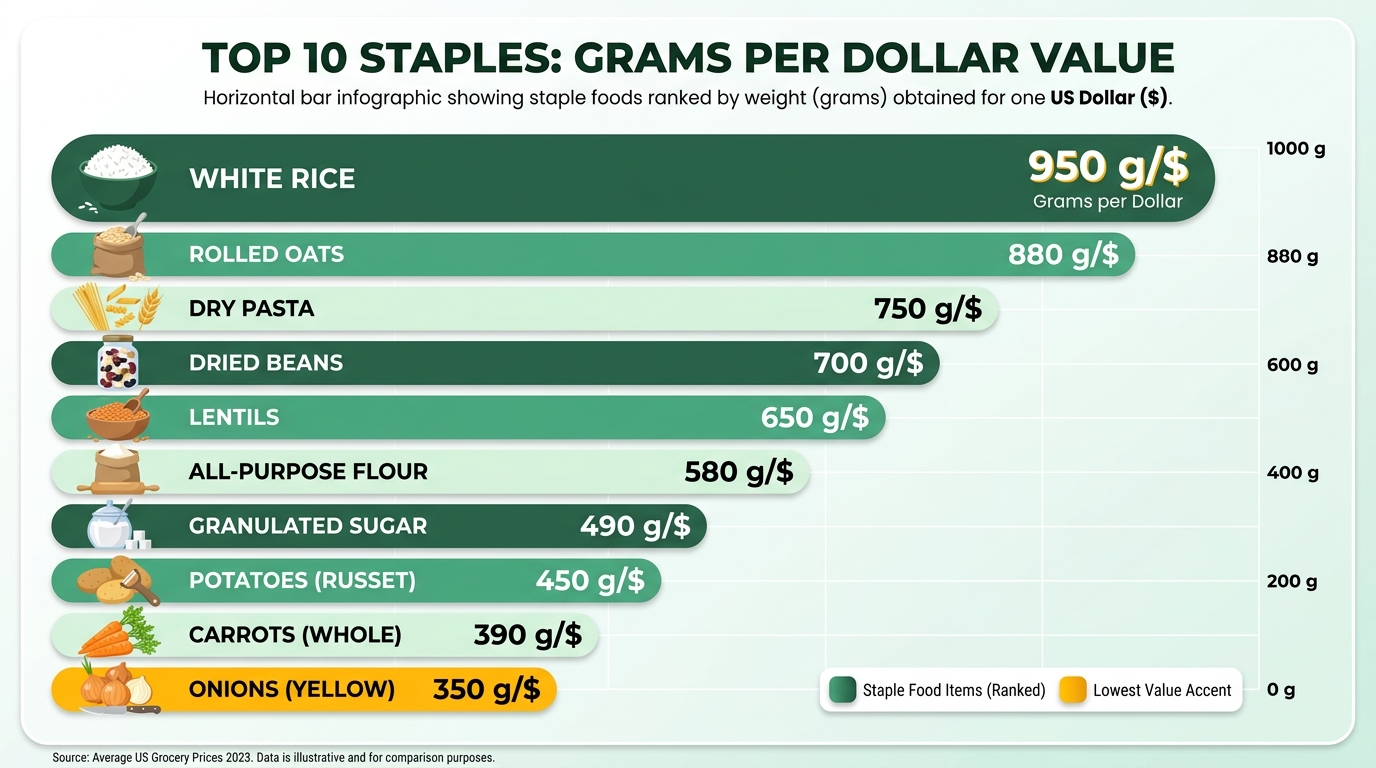
Which staples give you the most protein per dollar?
Shelf-stable items deliver the most grams per dollar before any coupon touches them. Perishables and pre-portioned items sit lower. Here's the ranked ten.
- Textured vegetable protein (TVP): The value leader. Dried, shelf-stable, dense in protein per dollar. Buy it from bulk bins where discount grocers price it lowest.
- Dried lentils: Pennies per serving, packed with protein and fiber. A one-pound bag stretches across a week of meals.
- Dried black beans and chickpeas: Cooking from dry rather than buying canned drops the cost per gram sharply. Warehouse clubs win on multi-pound bags.
- Eggs: The best animal protein by value, especially in flats of 60 from warehouse clubs. Fast turnover keeps them fresh.
- Rolled oats: A bulk-bin staple most shoppers skip when tallying protein. Buy from the scoop bins rather than boxed name brands and the cost per gram drops further.
- Canned tuna and sardines: Strong protein per dollar and shelf-stable. Case pricing at warehouse clubs beats single cans.
- Peanut butter: Cheap protein and calories in one jar. Store-brand tubs cut the cost further.
- Tofu: Discount grocers price block tofu lower than most supermarkets. Solid protein per dollar for a versatile staple.
- Cottage cheese and plain Greek yogurt: Mid-pack value. Buy the large tub, never single-serve cups.
- Chicken thighs: The animal-protein baseline. Solid value, but plant-based options and eggs still beat them on a strict grams-per-dollar basis.
How do coupons and store type shift the ranking?
Digital coupons and loyalty apps can move a mid-pack item up two or three spots overnight. A yogurt tub at full price loses to lentils. The same tub with a stacked app discount competes with eggs. Check the weekly digital deals before you lock your list.
Store type does the heavy lifting. Buy dried legumes and TVP at discount grocers, eggs and canned fish in warehouse-club volume, dairy where turnover keeps it fresh. This split alone protects your budget. A quick check using Popgot's price matching can confirm which local retailer currently has the lowest price.
One rule that pays off every time: cook from dry whenever you can. Canned beans cost more per gram than the same beans bought dry. That single swap keeps your protein spend lean without cutting a gram from your goals.
Calculating Grams Per Dollar for High-Protein Staples
Grams per dollar is one simple division: total grams of protein in a package divided by the total price you pay. That single number tells you which staple stretches your budget furthest. Price per pound hides the answer. Protein per dollar reveals it.
Here's why the math matters. A cheap-looking package can lose to a pricier one on actual protein content. Canned tuna looks expensive next to a bag of rice, but tuna delivers close to 20 grams of protein in a small can, and several pantry staples quietly outperform pricier picks once you run the numbers, as Healthline notes in pointing shoppers beyond the traditional meat sections. Do the division and the shelf-tag winner and the protein winner often turn out to be two different products.
How do you calculate grams per dollar?
Grams per dollar takes three inputs: the package price, the number of servings, and the protein grams per serving on the nutrition label. Multiply servings by protein per serving to get total grams. Divide that by the price. The higher the result, the more protein each dollar buys.
Try it with a real package. A bag of dried lentils costs $1.80 and holds about 13 half-cup servings, with roughly 9 grams of protein each. That's 117 grams for $1.80, or about 65 grams per dollar. Compare that against a protein source priced by weight and the winner often flips.
Work in the same units every time. Convert everything to grams and dollars before you compare, or your ranking breaks. Accurate unit pricing is the whole game. A shelf tag showing price per ounce and another showing price per pound will fool you if you don't standardize first.
What factors move the price of high-protein staples?
Protein prices swing on production cost, market demand, and how a store sources its stock. Shelf-stable items like dried legumes and oats stay cheap because they store and ship easily. Perishable proteins carry handling and spoilage costs that push their price per gram up.
Standardizing food cost by protein content, not weight or calories, reshuffles the entire value ranking. Water weight and non-protein macros often skew the perceived value of fresh foods. Two foods at the same price per pound can land far apart once you measure. That gap is where your savings hide.
Store type stacks on top of that. The same staple carries different tags at a warehouse club, a discount grocer, and a mainstream supermarket. Frozen chicken sets a common benchmark, yet historical supermarket price research confirms that multiple plant and dairy categories consistently deliver more protein per dollar than standard poultry cuts.
Why does accurate unit pricing change what you buy?
Accurate unit pricing shifts buying decisions because it exposes value the shelf tag hides. Rank by grams per dollar and you stop overpaying for protein you thought was cheap. A product attributes checklist helps you compare identical grades of food, so you don't accidentally pit premium organic against standard conventional and call it a fair fight.
Price Comparison Across Major Retailers for High-Protein Staples
Prices for the same staple can swing 30% or more between two stores on the same block. That gap is where a smart shopper wins or loses. Before you commit, run a quick cross-retailer check, because the sticker at your default store rarely reflects the best available price.
Prices move so much because of three levers: weekly sales, loyalty-app discounts, and price-matching policies. Each one shifts the real cost of protein independent of the shelf tag. A tub of tofu or a dozen eggs can look fixed in price, yet the amount you actually pay depends on which lever is active the day you shop. Building a low-carb grocery run around those levers beats loyalty to any single chain.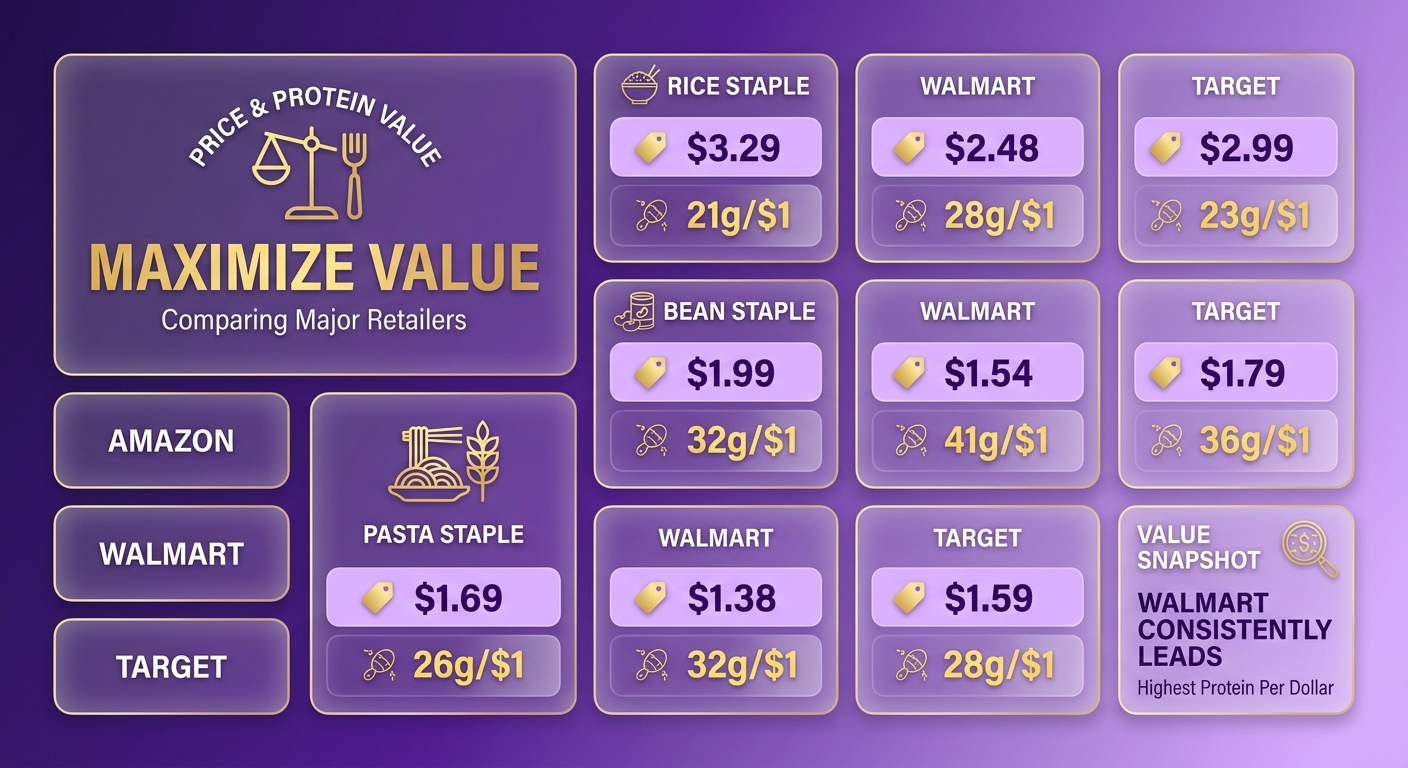
How do sales and loyalty programs change protein pricing?
Sales and loyalty programs cut the cost of protein without changing the product. Weekly circulars rotate discounts across categories, so canned tuna is deep-discounted one week and dried beans the next. Loyalty apps stack digital coupons on top, often dropping perishables like eggs or Greek yogurt another 10% to 20%. Stores use protein staples as traffic drivers. They know shoppers who come in for cheap eggs fill the rest of the cart. That's why a ranking by actual protein cost pays off: it flags the moment a temporary markdown makes a premium item a better buy than your usual staple.
Time your buys to the cycle. Stock shelf-stable proteins when they hit their sale low, and lean on loyalty coupons for the perishables you can't stockpile. This alone reshuffles which staple gives the most protein per dollar in any given week.
Why does unit pricing beat the shelf tag?
Unit pricing exposes the true cost that package sizes hide. Unit price: the cost per standardized measure, like per ounce or per 100 grams, printed on the shelf label. It lets you compare a bulk bag against a small box without mental math, which is exactly the point of standardizing food cost to expose the hidden premiums charged for convenience and branding.
Here's the catch: unit pricing usually standardizes by weight, not protein. A cheap-per-ounce grain can still lose to a pricier legume. So convert the unit price into protein yourself, or use a tool that surfaces protein content and price side by side.
Accurate labeling is what makes that comparison trustworthy. Verify the protein number on the package matches the database figure before you commit, and watch for granular price matching that catches a lower price at a competing store. That transparency is the difference between guessing and knowing which staple truly stretches your budget.
Price matching turns competition in your favor. When one retailer honors a rival's advertised price, you capture the lowest number without a second trip. Filter your search by protein type, sort by verified cost per gram, and let the stores compete for your cart.
References
[1] 17 Cheap and Healthy Sources of Protein - https://www.healthline.com/nutrition/cheap-protein-sources
[2] Protein Sources Ranked by Cost: What 30 Grams of Protein Actually Costs - https://www.thebodybuildingdietitians.com/blog/protein-sources-ranked-by-cost-what-30-grams-of-protein-actually-costs
[3] Standardizing the monetary cost of selected foods by ... - https://www.researchgate.net/figure/Standardizing-the-monetary-cost-of-selected-foods-by-weight-energy-and-protein-content_tbl2_354010857
[4] (PDF) Cheaper than chicken: protein foods ranked by ... - https://www.researchgate.net/publication/6117941_Cheaper_than_chicken_protein_foods_ranked_by_supermarket_prices
Frequently Asked Questions
1. Is TVP a complete protein, or do I need to combine it with other foods?
TVP, made from defatted soy flour, is a complete protein containing all nine essential amino acids, unlike most single plant sources. That sets it apart from lentils and beans, which are lower in methionine. You can rely on it as a standalone protein without pairing it with grains.
2. For a one-person household, does bulk buying still save money on protein?
Bulk buying pays off for solo shoppers only on shelf-stable staples like dried beans, TVP, and canned tuna, which keep for months without spoilage risk. Skip warehouse-sized perishables like 60-egg flats or large dairy tubs unless you'll finish them before they expire, since waste erases the per-unit savings.
3. Why is cooking beans from dry cheaper than buying canned?
Canned beans charge you for water weight, packaging, and processing, roughly doubling the cost per gram of protein versus dry. A pound of dried beans yields two to three cans' worth after cooking. The tradeoff is time: dried beans need soaking and simmering, while canned are ready instantly.
4. How does grams per dollar differ from cost per calorie when picking proteins?
Grams per dollar measures protein value specifically, while cost per calorie measures overall energy value. Peanut butter scores well on calories per dollar but ranks mid-pack on protein per dollar because much of its content is fat. For protein goals, always divide by protein grams, not total calories.
5. Do cheaper proteins sacrifice nutritional quality compared to premium options?
Cheaper staples often deliver more nutrition, not less. Dried lentils and beans add fiber, iron, and folate that premium formats lack, while eggs supply vitamin D and choline. The convenience premium on liquid egg whites or pouches buys speed and portioning, not better nutrients, so budget picks rarely mean nutritional compromise.
6. Can a price-comparison tool actually beat checking unit prices myself?
Comparison tools like Popgot pull live prices across multiple stores and calculate grams per dollar instantly, eliminating the need for tedious manual math at the shelf. They pay off most when planning a comprehensive weekly grocery run across multiple food categories, where small price differences across ten or more items can quietly add up to significant savings.
7. How should I store bulk dried proteins to prevent waste?
Keep dried legumes, TVP, and oats in airtight containers away from heat and moisture, where they last one to two years. Older dried beans take longer to cook and may stay firm, so rotate stock and use oldest first. Canned tuna and sardines store several years in a cool pantry.