
Unflavored Gelatin Powder: Bulk vs Single-Box Price Breakdown

Key Takeaways
- A 1 lb bulk bag of high-bloom bovine gelatin runs about $12.49, or roughly $0.78 per ounce.
- The D'Gari single-box 4-pack sells for just $1.78 total but costs the most per ounce at $1.78.
- A Kraft/Knox-style 4-count box at Target runs $2.99, or about $0.75 per ounce.
- Shelf stickers almost never show cost per ounce, so you're stuck doing the math to spot the real deal.
- Bulk pays off for anyone who bakes, makes bone broth gummies, or shops keto every week.
- Buy gelatin once or twice a year? A bulk bag just goes stale while you pay for volume you won't finish.
- The mid-size 5 oz Divided Sunset Beef Gelatin costs $5.92, landing at $0.99 per ounce, right between bulk and single-box.
Quick Summary
Buying unflavored gelatin powder in bulk almost always beats single boxes on cost per ounce. A 1 lb bag of high-bloom bovine gelatin runs about $12.49 at a bulk supplier. A 4-count box of single-serve packets costs $2.99 at retail. Break those down per ounce and the gap gets wide fast.
If you bake, make bone broth gummies, or hit a keto grocery run every week, bulk wins. If you use gelatin once or twice a year, skip it. The bag will sit in your pantry losing freshness while you pay for volume you'll never finish.
Bulk vs. single-box: which actually costs less per ounce?
Bulk wins on unit price nearly every time. The catch is that shelf stickers rarely show cost per ounce, so you have to do the math yourself. Here's a snapshot of typical retail listings.
| Product | Type | Size | Total Price | Price/oz | Difficulty to Find |
|---|---|---|---|---|---|
| D'Gari Unflavored Gelatin | Single-box | 0.25 oz × 4 pack | $1.78 | $1.78/oz | Easy |
| Kraft/Knox-style box (Target) | Single-box | 4 ct × 1 oz | $2.99 | ~$0.75/oz | Easy |
| Divided Sunset Beef Gelatin | Mid-size | 5 oz | $5.92 | $0.99/oz | Moderate |
| Great Value Unflavored Mix | Value box | 0.25 oz × 32 ct | Varies | Check per-oz | Easy |
| High-Bloom Bovine (bulk supplier) | Bulk | 1 lb (16 oz) | $12.49 | ~$0.78/oz | Harder |
Notice the surprise: the $1.78 D'Gari 4-pack actually costs the most per ounce at $1.78/oz. Cheap total, expensive real value. That's exactly the trap unit pricing exposes.
Does bulk actually save you time?
Bulk saves you repeat trips and repeat math. Buy one 1 lb bag and you're covered for months of baking or broth-making. Buy tiny 0.25 oz packets and you're back at the store every few recipes.
The catch is finding a real bulk deal. Single boxes sit on every grocery shelf. Quality high-bloom bovine or beef gelatin in bulk usually lives at specialty suppliers, which makes it harder to track down. A tool that pulls real cost per ounce across retailers turns a 20-minute price hunt into one glance. Popgot's unit-pricing feature does this, so you can sort by true value instead of sticker price.
What I'd actually recommend
Buy bulk if you use gelatin more than once a month. The per-ounce savings compound, and beef or bovine gelatin holds up well in a sealed pantry. Look for high-bloom grades if you want firm sets in gummies and desserts.
Stick with single boxes for occasional use only. And always check price per ounce, not price per box. A 5 oz beef gelatin around 99¢/oz is a solid middle ground when a full pound is too much. Searching by spec on Popgot surfaces options like it across retailers in one pass.
What unflavored gelatin actually does
Unflavored gelatin powder does one job better than almost any pantry staple: it sets liquids into gels without changing flavor. That's why it shows up in bone broth gummies, keto desserts, panna cotta, and protein-boosted recipes. If you hit a keto grocery store weekly for high-fat, low-carb staples, gelatin belongs on the list.
Demand has climbed alongside keto and paleo eating. Walmart's shelves now split into two camps: single-use packets aimed at bakers, and bulk canisters marketed straight to keto and paleo shoppers. That shift tells you who's buying. When a mainstream grocery run includes gelatin, suppliers respond with bigger formats.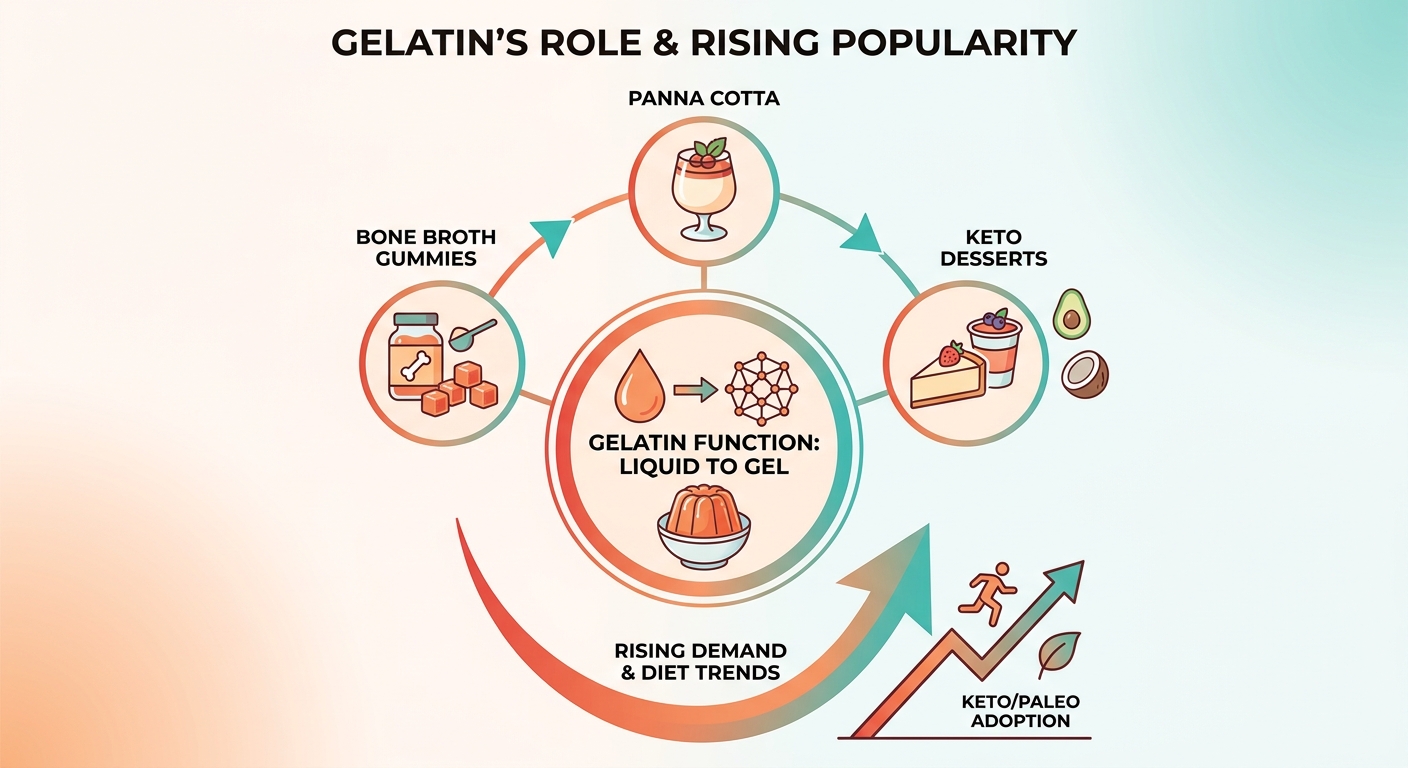
Who actually benefits from bulk gelatin?
Two groups get the most value: regular bakers, and health-conscious cooks who use gelatin often. If you bake or cook weekly, bulk canisters deliver the best cost per serving. Occasional users see far less upside and should stick to small boxes.
Bakers care about set quality, not just price. A gel that turns rubbery or fails to firm ruins the recipe. Health-focused cooks lean on gelatin for protein content and gut-friendly recipes like broth-based gummies. Both groups win when the powder blooms properly and sets clean.
Why set quality varies so much
Not every gelatin powder sets the same way, even at the same price. Hands-on testing at Walmart found real differences between products that look identical on the shelf. Bloom strength and grind matter more than the label suggests.
Bloom strength: a measure of gel firmness. Higher bloom sets firmer with less powder. That's why bulk high-bloom bovine gelatin stretches further per ounce than cheap packets.
If your gummies won't hold shape or your dessert stays soupy, the powder is usually the culprit. Testing beats guessing. The bulk canisters reviewers rate highest tend to set reliably, which saves you wasted ingredients and redo time.
How to avoid buying the wrong product
Verify quality before you commit to a bulk bag. The trap with gelatin is that two products at similar prices can perform very differently. A canister that sets clean is worth more than a cheaper one that fails, even if the sticker looks better.
Price-comparison tools help. Popgot scans multiple stores at once, so you can check cost per ounce across suppliers without walking every aisle. That matters when the same bovine gelatin shows up at three different price points. Match the format to how often you cook. Buy bulk if gelatin is a weekly staple; grab a small box if it's a once-a-year purchase. Then confirm the specific product actually sets before you scale up.
The bulk pricing math
Bulk gelatin beats single-box pricing across every major retailer, but the size of the win depends on where you shop. High-bloom bovine bags from bulk suppliers carry a much lower per-ounce rate than single-serve packets, which sell for a few dollars per tiny box. Convert both to cost per ounce and bulk pulls ahead fast.
If you plan a weekly keto grocery run, this math matters. You're buying often enough that the per-ounce gap compounds over months.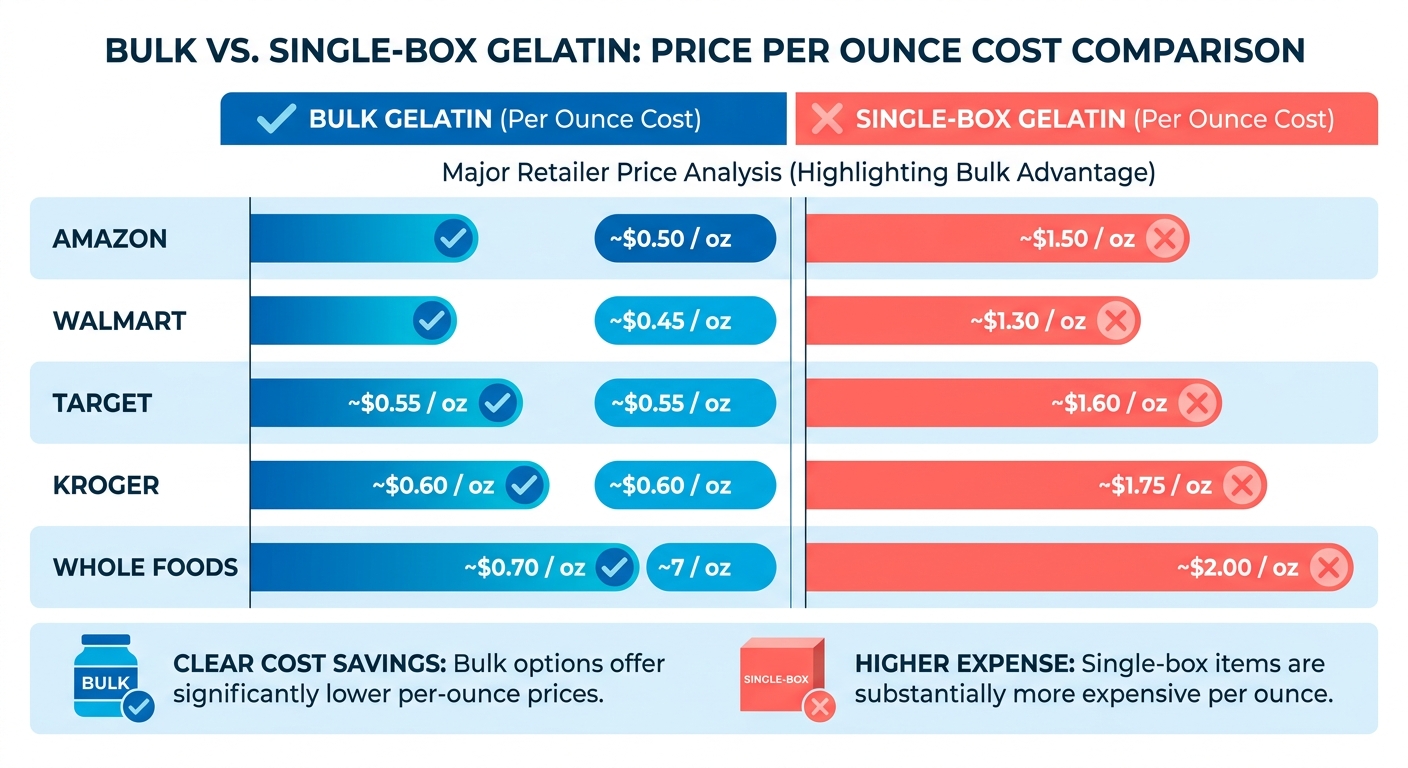
How bulk and single-box prices compare per ounce
Bulk gelatin drops your cost per ounce well below packet pricing. The savings come into focus when you line up mid-size and tiny formats against a true bulk bag.
Walmart's own listings make the spread easy to see. A 4-pack of unflavored gelatin at $1.78 carries a $1.78 per ounce rate. A 5 oz beef gelatin from another brand lists at $5.92, or about 98.7¢ per ounce. Mid-size beats tiny packets, and true bulk beats both.
The problem is that shelf tags rarely show per-ounce math side by side. Doing it manually across Amazon, Walmart, and Target eats time. A tool that scans multiple stores at once surfaces the real unit price without the mental math.
Cost per serving on bulk canisters
Cost per serving is where bulk canisters shine for frequent users. A single-serve packet holds about 0.25 oz, roughly one recipe's worth. A larger canister spreads its price across dozens of those recipe-sized portions, so each serving costs a fraction of what a packet does.
The gap widens as canister size grows. A 2 lb bulk canister stretches to roughly 128 servings, pushing the per-serving cost even lower than a smaller bag while cutting your reorder frequency in half.
That's the practical reason bulk canisters win for regular cooks. Bake homemade fruit snacks twice a week and you'll blow through a standard pantry supply fast. A bulk canister keeps that routine cheap, where a stack of small retail boxes multiplies the cost over months.
When to skip bulk
Skip bulk if you use gelatin once or twice a year. A large bag will sit in your pantry while you pay for volume you won't finish. Freshness matters, and slow use undercuts the per-ounce savings.
Buy bulk only when your usage justifies it. Weekly bakers, keto and paleo shoppers, and anyone making gummies or panna cotta on repeat clear the volume threshold easily. Walmart already splits its shelves into packets for occasional bakers and bulk canisters for high-frequency buyers.
Store bulk gelatin in an airtight container, away from heat and humidity. Dry, sealed, and cool keeps the powder stable so you actually use every ounce you paid for.
The case for single boxes
Single-box gelatin costs more per ounce, but it wins on convenience and low upfront spend. A small packet pack at Target or Walmart costs a couple dollars instead of committing to a full pound. For occasional bakers, that low ticket price beats buying more than you'll finish.
The math shifts fast when you buy small. If your keto grocery run only needs gelatin a few times a year, single boxes make sense. You pay less today and skip the freshness risk of a big bag going stale.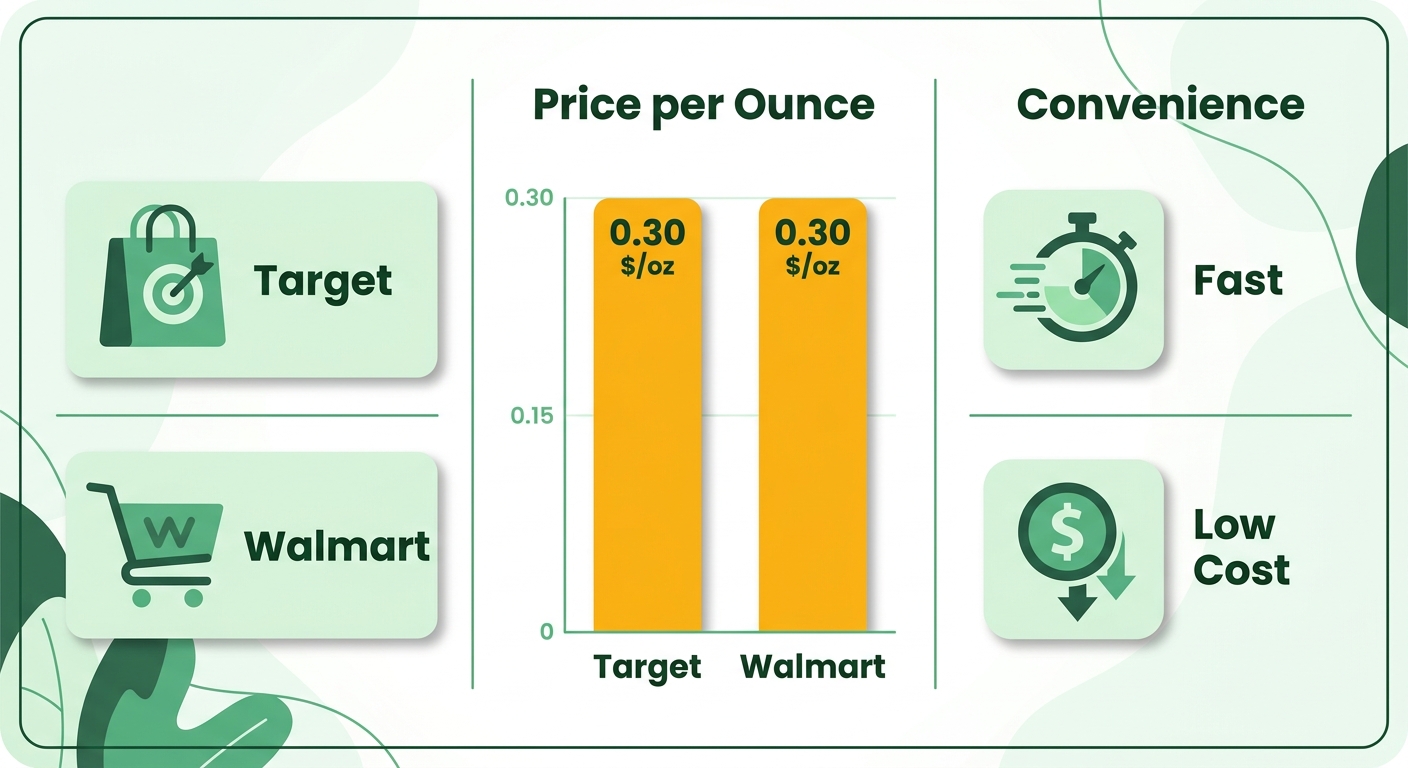
What single-box gelatin costs per ounce
Single-box unit prices land well above bulk, and the smallest packs sting the most. A four-packet box splits your total across tiny 0.25 oz pouches, which drives the per-ounce rate up sharply. Step up to a mid-size container and the per-ounce price drops closer to a dollar. Still above bulk, but a big improvement over the four-packet route. A 16 oz canister can fall under 60¢ per ounce depending on the store.
Here's the pattern to watch:
- Four-packet boxes: highest per-ounce rate, best for one-off recipes
- Mid-size containers (roughly 5 oz): middle ground on cost
- Bulk canisters (16 oz+): lowest per-ounce, best for frequent use
Shelf tags rarely show cost per ounce, so you're stuck doing the conversion in the aisle. A unit-pricing tool like Popgot's aisle scanner does that math across stores, which helps when two boxes look similar but hide different per-ounce rates.
Who should buy single boxes
Buy single boxes if you cook with gelatin rarely, want portability, or are testing a new recipe before committing. The convenience is real. Small packets pre-measure your dose, travel well, and don't eat pantry space.
Skip single boxes if you hit a keto grocery store weekly for gelatin. The per-ounce gap compounds fast when you buy often, and bulk canisters win on cost per serving for regular bakers.
Rule of thumb: single boxes for occasional use, bulk for weekly habits.
What about packaging waste?
Single-serve packets generate more packaging per gram than one large canister. Four separate pouches use more film and cardboard than a single 5 oz tub holding the same weight. If waste matters to you, the mid-size container splits the difference. It cuts per-ounce cost and trims packaging versus a stack of tiny packets.
Pick the format that matches how often you actually reach for gelatin.
Where the savings actually show up
Bulk buying pays off fastest for shoppers who cook with gelatin every week. A pound bag drops the cost per serving well below small packets, and that gap widens over a year of regular use. If you plan your keto grocery shopping around bone broth gummies or low-carb desserts, bulk is where the savings live. A pastry chef running weekly batches of panna cotta or fruit glazes burns through setting agent fast, so one bulk bag beats multiple retail boxes on both cost and packaging.
Who saves the most by buying bulk
Weekly cooks and bakers see the biggest savings. A reviewer who tested eight stores found the bulk bovine bag delivered the lowest per-ounce cost of any format. That's the profile: high frequency, steady volume, no risk of the bag going stale before it's gone.
Mid-size options fit in-between users too. Standard gelatin stays usable for two to three years when stored cool and dry, so a canister that lands between tiny multi-packs and a full pound rarely expires first. A reasonable step up if a full pound feels like too much for your rotation.
What recipes justify the bulk buy
Gelatin-heavy recipes make bulk an easy call. Bone broth gummies, panna cotta, keto desserts, and protein-boosted snacks all lean on unflavored gelatin as the setting agent. Make any of these on repeat and a pound bag disappears quickly.
Bakers who set fruit gels or firm up cheesecakes weekly fall into the same camp. A single cheesecake can pull half an ounce, and a tray of gummies runs higher. Stack a few recipes a week and you're clearing several ounces before the weekend, which is exactly the volume that makes bulk pricing worth it.
How to find the best deal fast
Comparing per-ounce prices across stores is the real time saver. Shelf stickers rarely show unit cost, so the deal often hides behind quick math. The reviewer who compared prices, quality, and delivery across major retailers found real spreads between formats.
You can skip the manual checking by scanning across stores at once. That turns a store-by-store hunt into a single glance at the lowest price.
The takeaway holds across every angle: buy bulk if you cook weekly, stick to single boxes twice a year, and always check cost per ounce before you commit. High-bloom bovine and beef gelatin both set reliably, so quality rarely forces your hand. Price and frequency should.
Popgot's multi-retailer search vs. Amazon's price tool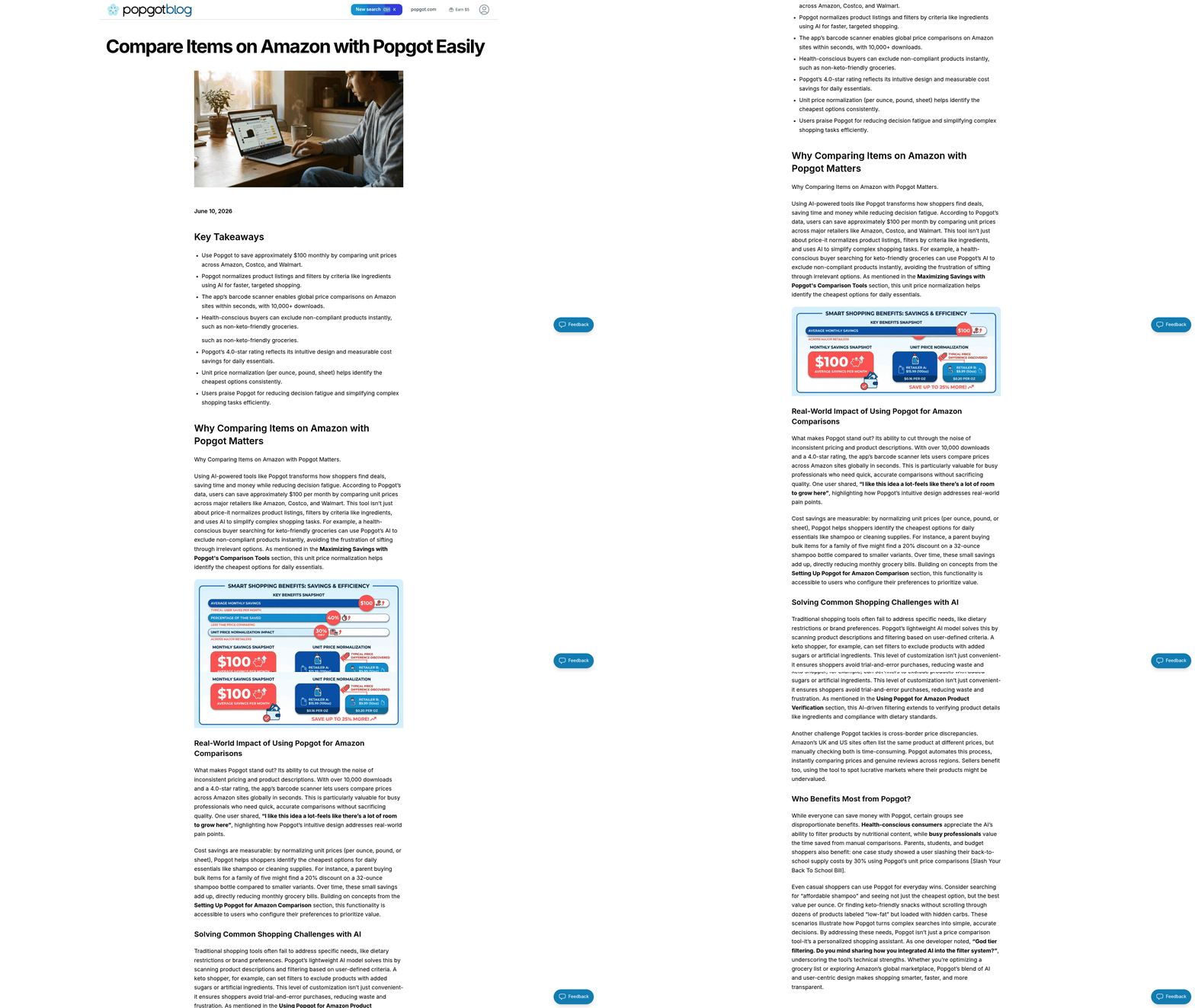
Searching beats checking one retailer's price and hoping it's the best. A multi-retailer search runs one query across many grocery sellers, so you compare options without opening eight browser tabs. Amazon's price comparison shows you options inside one marketplace, but it doesn't pull live shelf prices from Walmart, Target, and specialty sellers side by side.
That gap matters most on a keto grocery run, where gelatin sits next to a dozen other low-carb staples you buy weekly. When you're pricing bulk canisters against single boxes, a tool that checks every store in one search saves you the manual math the 8-store price test had to do by hand.
How many stores does a multi-retailer search actually check?
Multi-retailer search: a tool that pulls live prices from many grocery sellers in one query instead of one marketplace at a time. The hands-on gelatin comparison tested eight stores manually, including Amazon, Walmart, and Target plus specialty sellers. A search tool that scans eight stores at once does that same legwork in seconds.
Amazon's tool stays inside Amazon. It compares third-party listings for one product, which helps if you only shop there. But it won't surface a Target grocery deal or a warehouse-club canister that undercuts every Amazon seller on cost per ounce. Those listings live outside the marketplace, so Amazon's tool never sees them.
That's the core difference. One tool searches a marketplace. The other searches the market.
Which tool finds the better gelatin deal?
For unflavored gelatin, a cross-store search wins because the cheapest option often lives outside Amazon. The 8-store test found real price and quality gaps between Amazon, Walmart, Target, and specialty sellers. If your search only covers one of those, you miss the other three. Hunting for a specific grass-fed beef gelatin, you might see only high-priced third-party merchants on one platform, while a broader search reveals a regional supermarket has the same item on clearance.
The user experience follows the same logic. Amazon's comparison lives inside a product page and buries alternatives in a listings tab. A dedicated search tool leads with the price spread across stores, so the cheapest source surfaces first.
When Amazon's tool is enough
Skip the multi-store search if you already buy everything on one marketplace and value delivery speed over saving a few cents per ounce. Amazon's price comparison does a fine job ranking sellers for a single product when you're locked into that ecosystem.
But for weekly keto shoppers pricing gelatin against a dozen stores, the cross-retailer approach pays off fast. The savings compound over months of restocking. When the cheapest bag lives at Walmart or a specialty seller, a tool that checks all of them beats one that checks none of them.
Using Popgot's AI product verification for gelatin
AI Product Verification checks a gelatin product's quality claims before you buy. It reads label specs, bloom strength, and source type, then flags mismatches between what a listing promises and what the product actually delivers. You get a clear answer on whether a canister or packet meets your standards without opening eight tabs.
This matters most on a keto grocery store run, where gelatin sits beside a cart full of low-carb staples. Walmart's shelves already split into two camps: single-use baking packets and bulk canisters. Verification helps you tell which one actually sets, sources cleanly, and holds up for your recipes.
How to run a verification search
Start by entering the product type and the spec that matters to you. For unflavored gelatin, that usually means bloom strength and source (bovine or porcine). The feature returns verified results ranked by how well they match your inputs.
- Enter your product. Type "unflavored gelatin powder" and pick bulk or single-box. This narrows results to the format that fits your cooking habit.
- Set your specs. Add filters for high-bloom bovine if you make gummies or panna cotta. High bloom sets firmer, which matters for recipes that need structure.
- Review the verified match. The feature checks each listing's claims against its label data and flags anything that doesn't line up.
For weekly cooks, the bulk canisters that tested best on cost per serving are worth setting as your default filter. That keeps repeat searches fast.
What filters health-conscious shoppers should use
Set filters that match your actual recipes, not generic defaults. Bloom strength controls how firm your gel sets. Source type matters if you follow paleo or avoid porcine gelatin. Format (bulk vs single-box) shapes your cost per ounce over months of use. A baker making delicate, clear fruit jellies might prioritize a specific bloom rating so the texture stays light rather than rubbery. Verifying that upfront keeps you from buying a heavy-duty industrial gelatin that's wrong for fine desserts.
A shopper watching sodium takes a different route. They add a source filter and check verified label data for additives, since some blends carry preservatives or flow agents a plain bloom search won't surface. Verification pulls those specs forward, so a "pure" claim gets confirmed against the actual ingredient list.
Tips for cleaner results
Lock in your recipe-driven filters once, then reuse them. Repeat searches run faster and stay consistent when your specs don't change trip to trip.
Cross-check verified matches against a multi-store price scan. Verification tells you the product is legit; the price scan tells you where it costs least. Running both closes the gap between quality and value on a single grocery run.
Skip the feature for one-off purchases where any gelatin works. If you're setting a single dessert and don't care about bloom or source, verification adds a step you don't need. Save it for the ingredients you buy often and depend on to perform.
References
[1] Where to Buy Gelatin Powder: I Tested 8 Stores to Find the Best ... - https://carpe-dev.umd.edu/sites/default/files/news.html?p=where-to-buy-gelatin-powder-i-tested-8-stores-to-find-the-best-quality-and-price-2026-6a19f3b9600e1
[2] Great Value Unflavored Gelatin Mix, 0.25 oz, 32 Count - Walmart.com - https://www.walmart.com/ip/Great-Value-Unflavored-Gelatin-Mix-0-25-oz-32-Count-Pouches/531996398
[3] Which Gelatin Powder at Walmart Actually Sets Properly? My Hands ... - https://cs.lmu.edu/~ray/video/p-which-gelatin-powder-at-walmart-actually-sets-properly-my-hands-on-comparison-2026-6a2ba9cbdc2b9.html
[4] 2024's Best Unflavored Gelatin Powder: Tested & Reviewed - https://aaron.cs.virginia.edu/icpc/media/?p=2024-s-best-unflavored-gelatin-powder-tested-reviewed-6a1f97910b142
Frequently Asked Questions
1. Does unflavored gelatin powder expire, and how long does it last once opened?
Standard gelatin stays usable for two to three years when stored cool and dry. Once opened, transfer it to an airtight container away from heat and humidity. Moisture is the main enemy, causing clumping and weaker sets. Properly sealed, a bulk bag easily outlasts a year of regular baking or gummy-making.
2. What's the difference between bovine and porcine gelatin for cooking?
Bovine gelatin comes from cattle sources, while porcine derives from pigs. Both set liquids effectively, but bovine suits shoppers avoiding pork for dietary or religious reasons. High-bloom bovine grades set firmer with less powder, making them popular for keto gummies and desserts. Source type also matters for verifying label claims before buying.
3. How much gelatin does one batch of bone broth gummies actually use?
A single batch of bone broth gummies runs roughly 3 to 4 ounces of gelatin. Making gummies twice weekly burns close to a pound every month, or around 100 servings annually. At that pace, a bulk bag covers a full month in one purchase versus constant small-box restocking.
4. Why do two gelatin products at the same price set so differently?
Bloom strength and grind quality cause the variation, not price. Bloom strength measures gel firmness, so higher-bloom powder sets firmer with less product. Two identical-looking shelf products can perform very differently, leaving your dessert soupy or your gummies rubbery. Testing or verifying specs beforehand prevents wasted ingredients and recipe redos.
5. How can I calculate cost per ounce myself if shelf tags don't show it?
Divide the total price by the package weight in ounces. A $2.99 four-count box at one ounce each equals roughly $0.75 per ounce. Tiny 0.25 oz packets often hit $1.78 per ounce despite cheap sticker prices. Tools like Popgot's unit-pricing feature extract this math across retailers automatically.
6. Why does Amazon's price comparison miss cheaper gelatin deals?
Amazon's tool only compares listings inside its own marketplace, so it never sees Walmart canisters, Target house brands, or specialty supplier bags that undercut it on cost per ounce. Those listings live outside Amazon entirely. A multi-retailer search like Popgot pulls live prices from many sellers in one query instead.
7. Is the mid-size 5 oz container ever the smarter choice?
The 5 oz format works best when a full pound feels excessive but four-packets cost too much. At roughly 99¢ per ounce, it sits between bulk and single-box pricing. It also cuts packaging waste versus stacked tiny pouches and fits users who cook monthly rather than weekly.